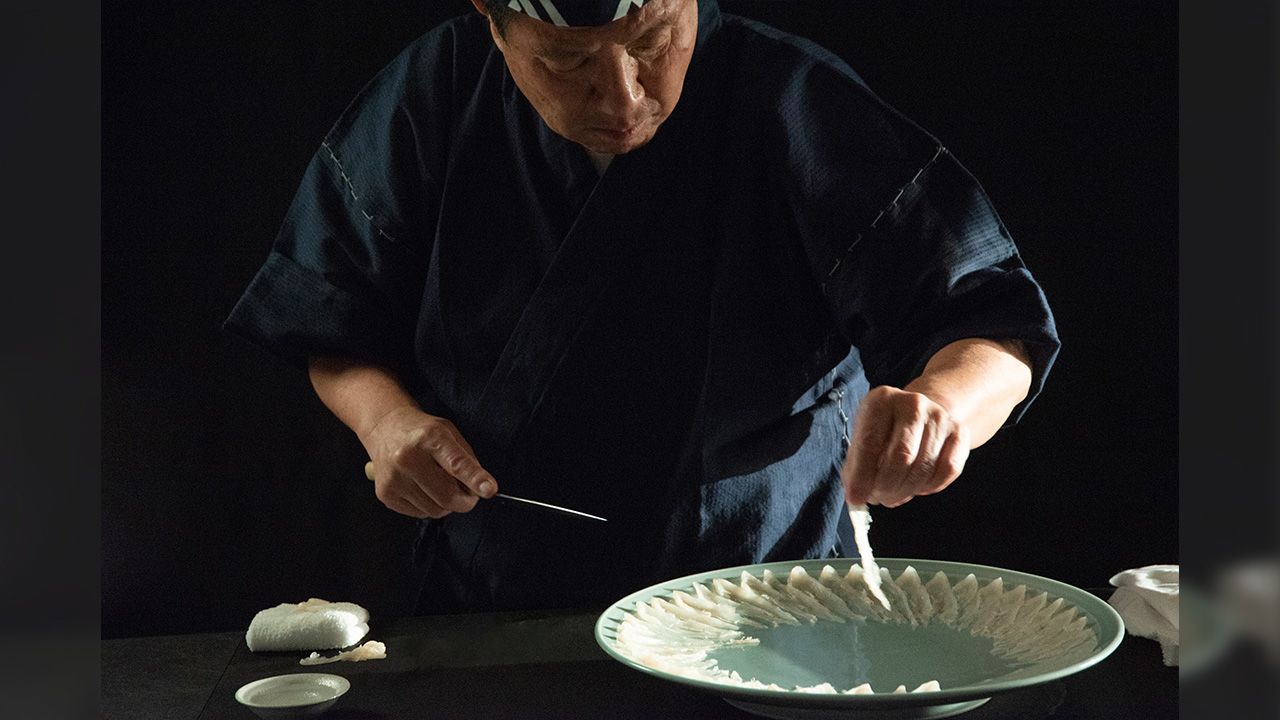
Fugu Film: Documentary “Gun Fish” Explores Secrets of a Risky Food Culture
Cinema Food and Drink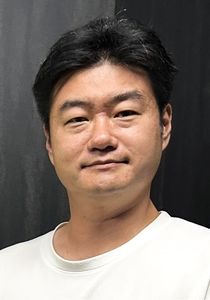
Uno Wataru
Film director. Born in Gifu Prefecture in 1979. Completed the Fiction Course at the Film School of Tokyo before going to work for a video production house. In 2004 joined the Ogura Office and in 2011 Mode Films Inc., getting hands-on experience in planning and production of cinematic works. Went to work for the ad and film agency ColorBird in 2014; went independent in 2022 to work on Gun Fish, his own directorial debut.
- English
- 日本語
- 简体字
- 繁體字
- Français
- Español
- العربية
- Русский
A Perilous Delicacy
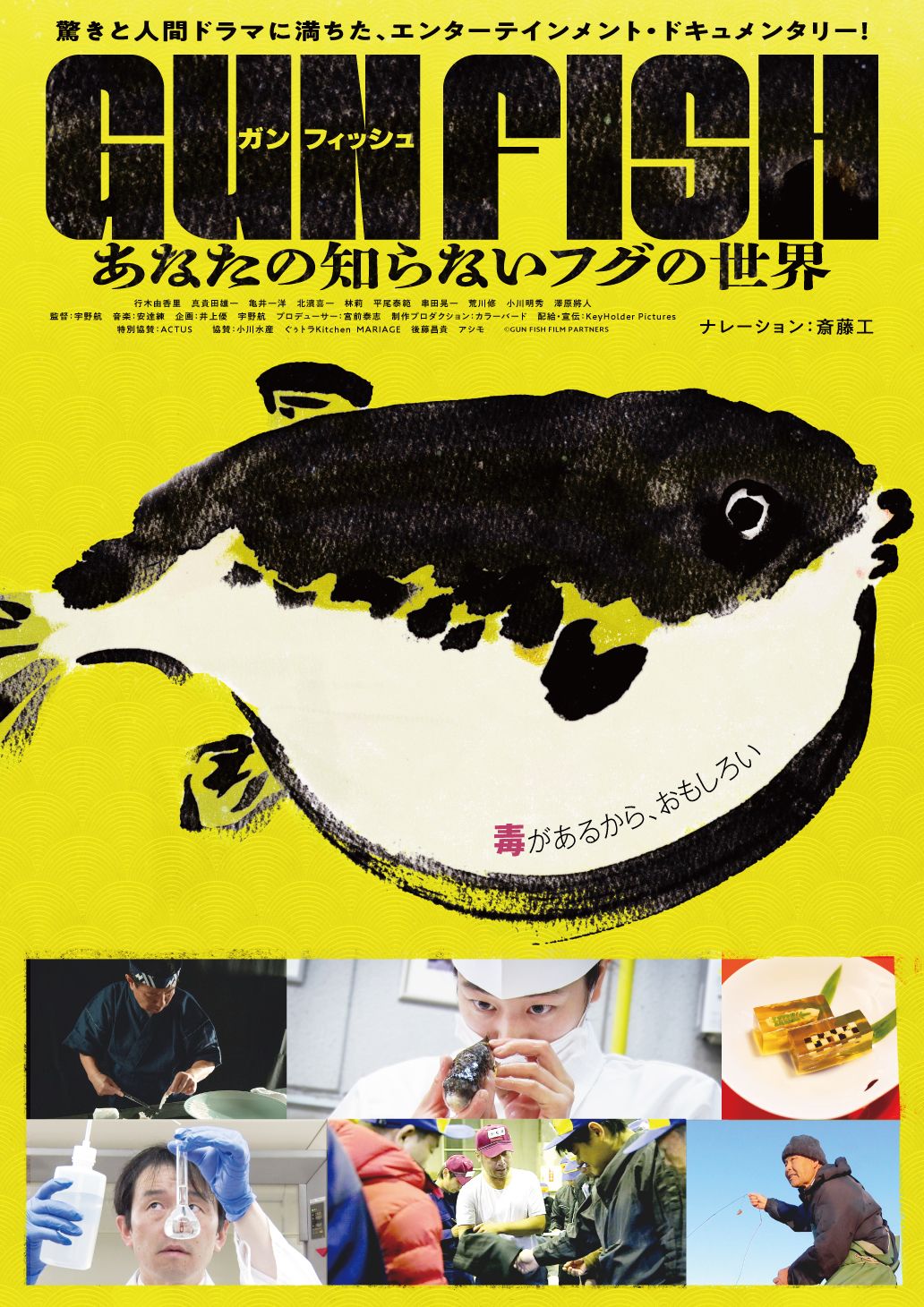
(© Gun Fish Film Partners)
The documentary Gun Fish opens at an official Tokyo facility dedicated to removing poison from fugu. At the time of filming in 2017, it was found in Tsukiji, before the world-famous wholesale seafood market moved to Toyosu. As you might assume from the name, this was a place where fugu, the general Japanese term for all varieties of blowfish, headed to market had their poisonous organs removed. In the off season lasting from spring through summer, it was also an exam venue for Tokyo’s fugu cook license.
Handling fugu is strictly controlled by rules set at the prefectural level. There is no national standard for acquiring or labeling the various licenses, but basically all are designed to ensure that cooks have the necessary knowledge and skills to serve fugu safely to the public.
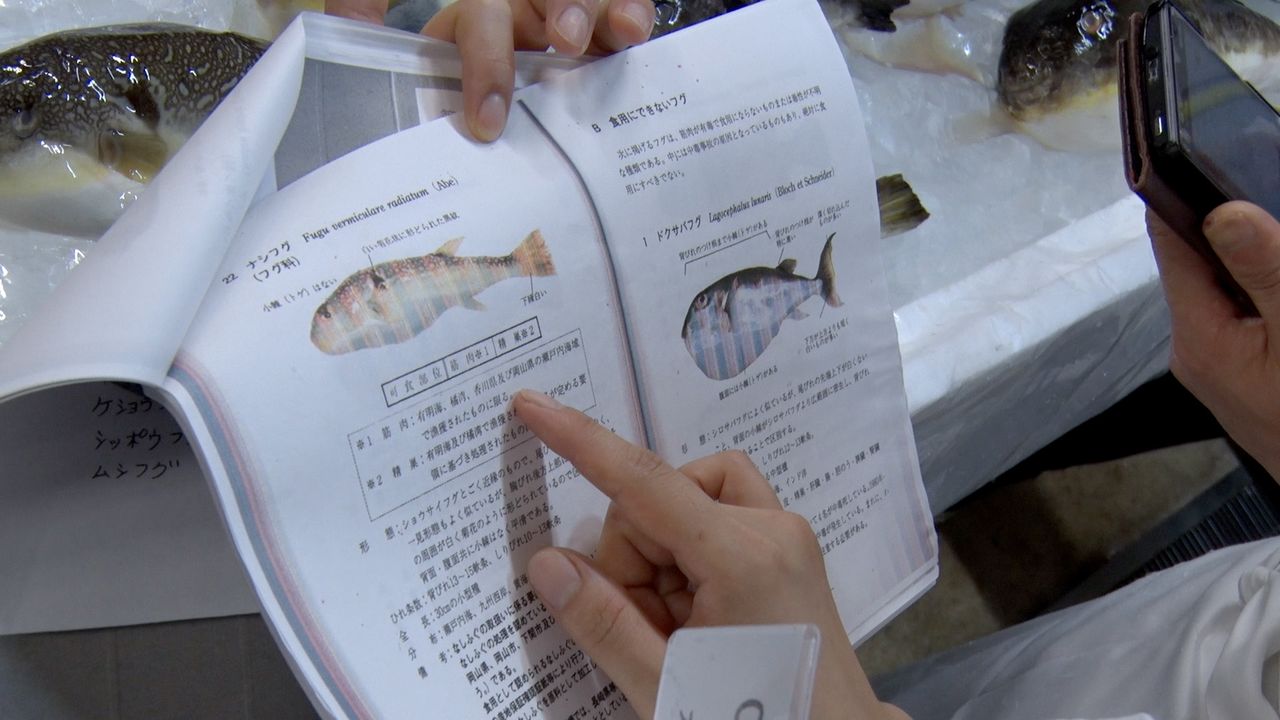
The exam for obtaining a fugu cook license requires detailed knowledge of various fugu varieties. (© Gun Fish Film Partners)
Getting certified requires being able to identify different fugu species, differentiate the edible and inedible parts of each, and safely clean the fish. Fugu poison, a form of tetrodotoxin, is mostly concentrated in the liver and ovaries, but the poisonous parts can vary by species. Of the 70 species of fugu that live in the seas around Japan, 22 have edible flesh, while 18 have edible milt (testes), and only 11 have edible skin and fins. The road to becoming a pro fugu cook requires a vast amount of knowledge and experience.
While filming at the toxin-removal station, documentary director Uno Wataru’s great discovery was the chef-in-training Nameki Yukari, who became his film’s main focus. Just 23 years old at the time of filming, she first takes the screen near the very beginning of her studies, at which point she seems not to have absorbed any of her lessons.
Uno looks back on her progress. “As we were filming her training, my first thought was that we wouldn’t be able to use any of the footage. But two weeks later, it was like watching a totally different person handling the fugu. It was fascinating. I called up a friend who’d been helping with the filming and said, ‘We’ve got our main character. We’re on our way to a movie.’ I remember being really excited.”
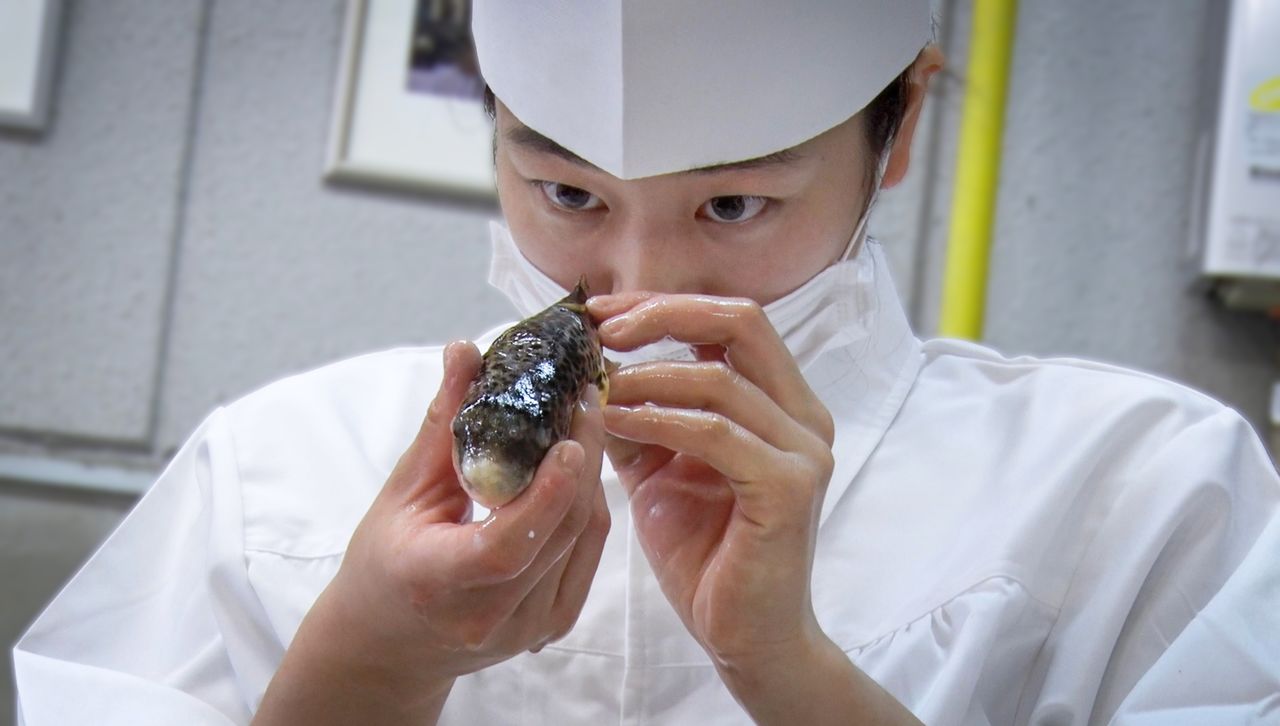
Nameki Yukari identifying fugu species. (© Gun Fish Film Partners)
The Future of Fugu Fishing
The first half of the film shows scenes of Nameki’s intense training, interwoven with easy-to-understand explorations of fugu biology, culture, and history that sketch out this fish’s unusual position.
One bit of trivia mentioned is how Shimonoseki in Yamaguchi Prefecture became the national center for all things fugu. It stands near many fertile fishing grounds and fugu had long been a part of local cuisine, but the decisive moment came when it was the first place in Japan for the official ban on serving fugu to be lifted. That was the work of Japan’s first prime minister, Yamaguchi-born Itō Hirobumi (1841–1909), who greatly enjoyed a fugu meal in Shimonoseki. The restaurant where he ate it, named Shunpanrō, is also where the peace treaty ending the First Sino-Japanese War (1894–95) was signed. The lifting of that ban allowed for fugu restaurants to flourish in Shimonoseki and encouraged rapid development in fugu dressing and cooking skills.
Haedomari, Shimonoseki’s fugu-specialty market, opened in 1974. Fugu caught all over Japan are brought here and the poisonous parts removed before the fish are shipped out for further processing nationwide. Shimonoseki thus rose to prominence not as a fishing center for fugu, but a major logistics hub for the fugu industry.
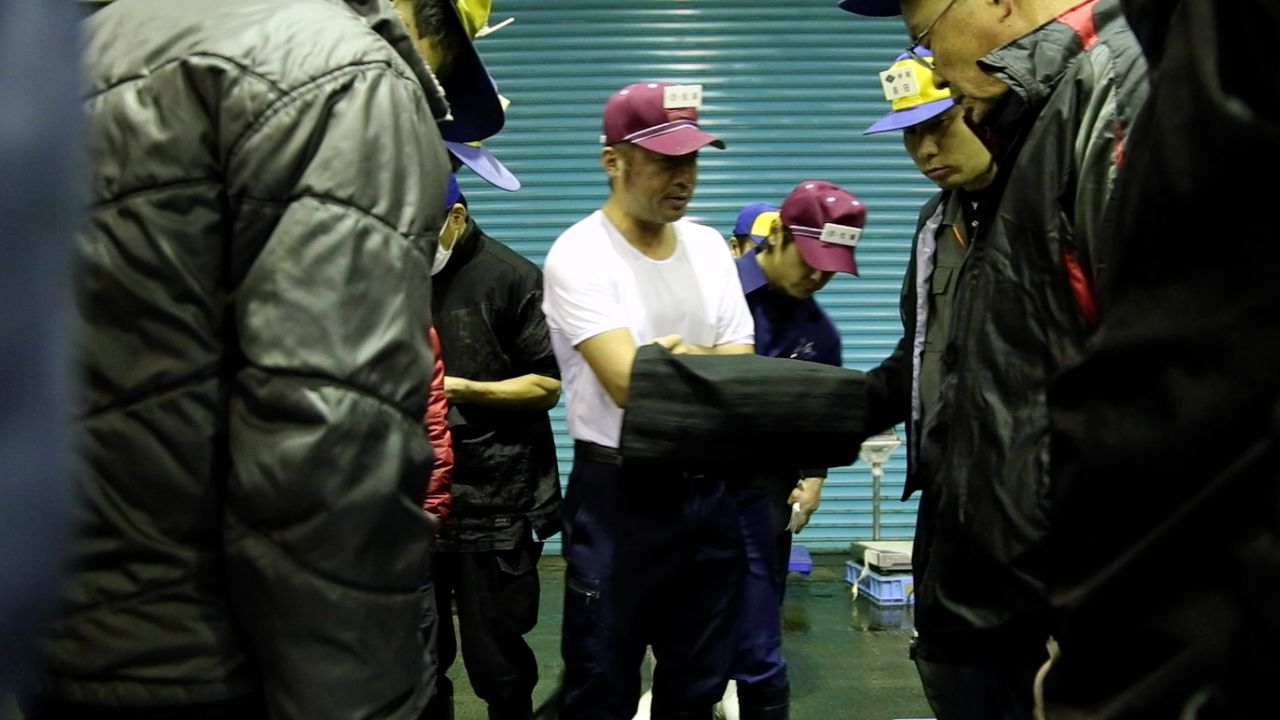
The traditional “bag auction” at Haedomari Market. The buyers indicated their bids silently, using finger signals inside the bag. (© Gun Fish Film Partners)
Today, though, the once-uncontested strength of the “Shimonoseki brand” is on the wane. “Even as farmed fish now accounts for 90 percent of the market, the wild-caught fugu fishing grounds have been migrating further and further north, with many now caught in Tokyo Bay, Sotobō in Chiba, or the seas off Sōma in Fukushima,” explains Uno. “The shift away from shipping fugu all the way down to Shimonoseki has only accelerated in the nine years since we filmed. I think Shimonoseki itself is standing at a crossroads.”
Osaka’s Original Fugu
When speaking of fugu, Osaka stands alongside Shimonoseki as a must-mention. It is the largest consumer market in Japan, accounting for 60% of all the fugu eaten on its own. Many buyers bring it in directly from the fishing ports, making it cheaper for consumers. As a result, its reputation as a high-end fish is relatively unknown in the city. Osaka also has a lot of licensed fugu cooks, and over the years has adopted its own unique approach to licensing. Uno got officially registered as a fugu cook in Osaka in 2017, and saw for himself the difference from Tokyo.
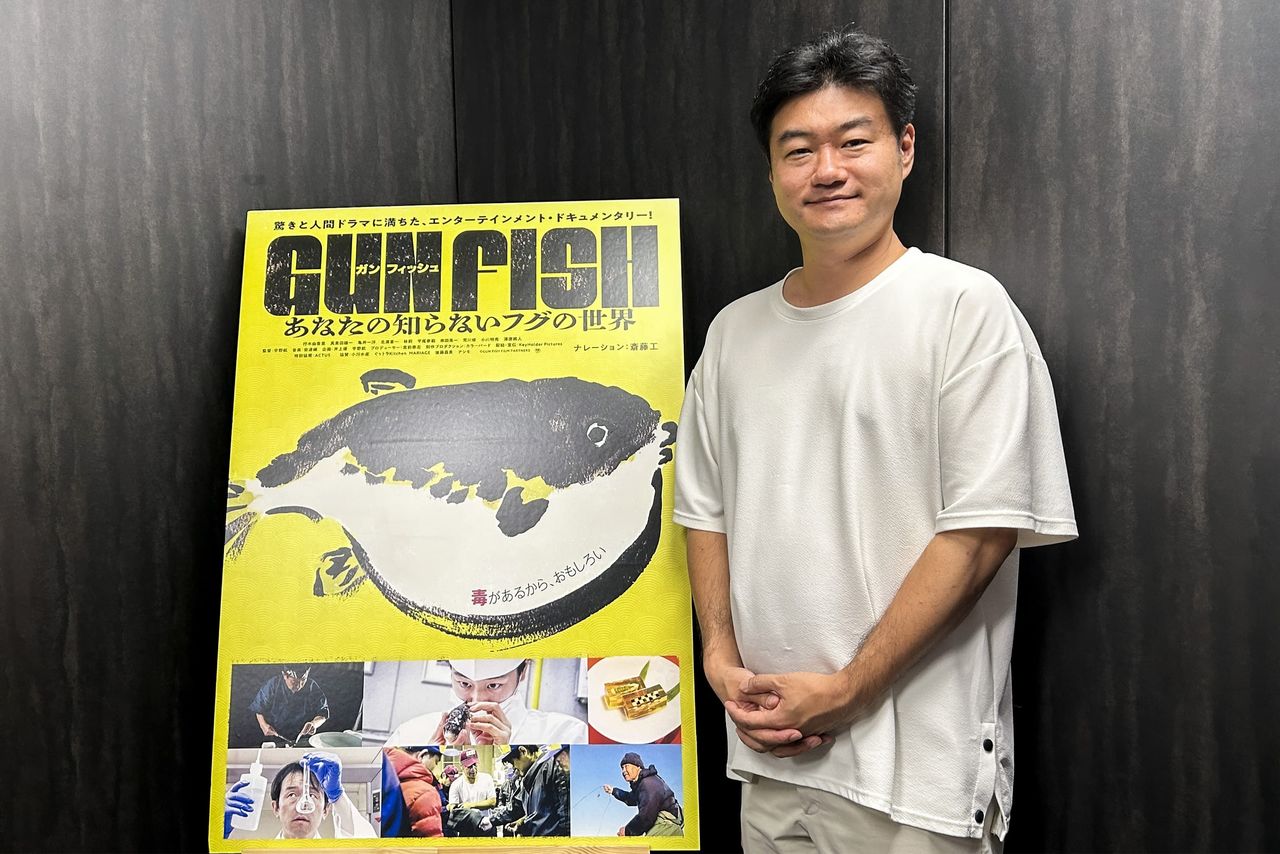
Director Uno Wataru. (© Nippon.com)
“For example, in Tokyo, there is a fixed pass rate, and if you don’t hit the required line, they’re just like, ‘See you next year.’ But in Osaka, they train you until you have the knowledge you need. Rather than detailed prep skills, the focus is on being able to remove the poisonous parts. You’re expected to learn all the cooking skills that come after that in the kitchen. It’s a fitting philosophy for Osaka, which has so many fugu restaurants.”
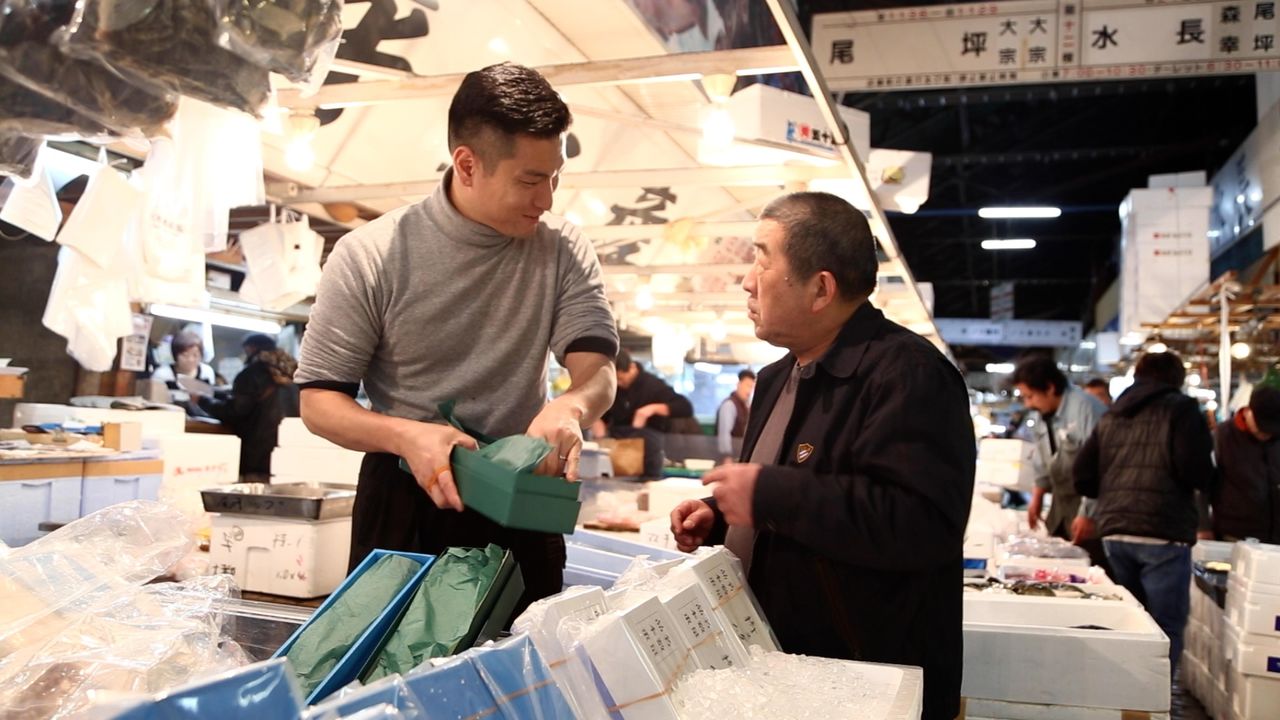
Kushida Kōichi, the fugu expert behind Kushida Suisan at Tsukiji (now Toyosu) market. (© Gun Fish Film Partners)
At the same time, the Zenkoku Fugu Renmei (National Fugu Federation), which features prominently in the film, is promoting uniform licensing across Japan, since the lack of a single standard makes it difficult to get import restrictions lifted in the EU and other global markets. Their efforts resulted in the Ministry of Health, Labor, and Welfare releasing guidelines on eliminating variance in prefectural rules. Tokyo responded by easing the qualifications for taking the exam and the knowledge tested, while Osaka has moved from a training-based system to an exam-based one.
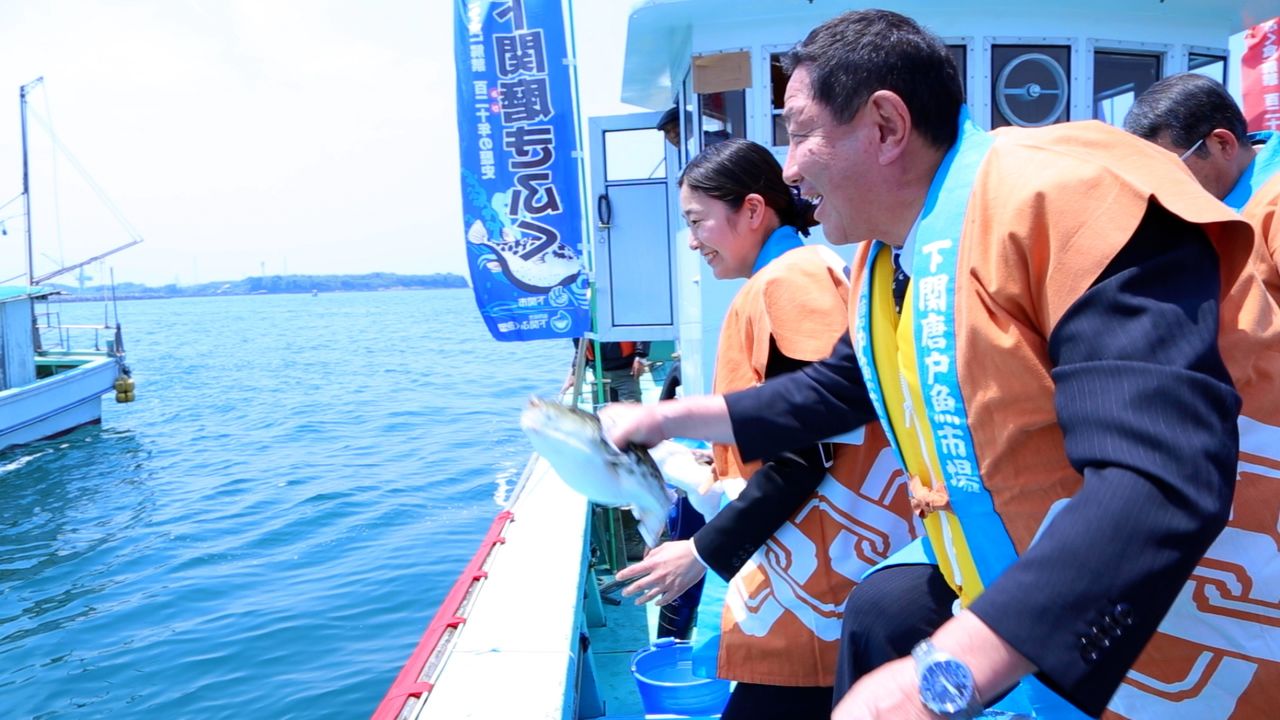
Shimonoseki’s annual Fuku (a local variation on the fugu name) Memorial Festival, which brings fugu professionals together from all over Japan. (© Gun Fish Film Partners)
The Meat of Fugu Cuisine
After viewers are given a crash-course in basic fugu knowledge in the first half, Gun Fish presents a heated debate around a core question in fugu food culture: What if fugu was made nonpoisonous?
The starting point is the taboo of eating the liver. The toxicity of fugu liver has long been common knowledge, but on hearing that it is also incredibly delicious, many people have apparently given in to temptation and lost their lives. One of them was famed kabuki actor Bandō Mitsugorō VIII (1906–75). The living national treasure’s 1975 death by fugu poisoning resulted in a law strictly punishing the sale of fugu organs.
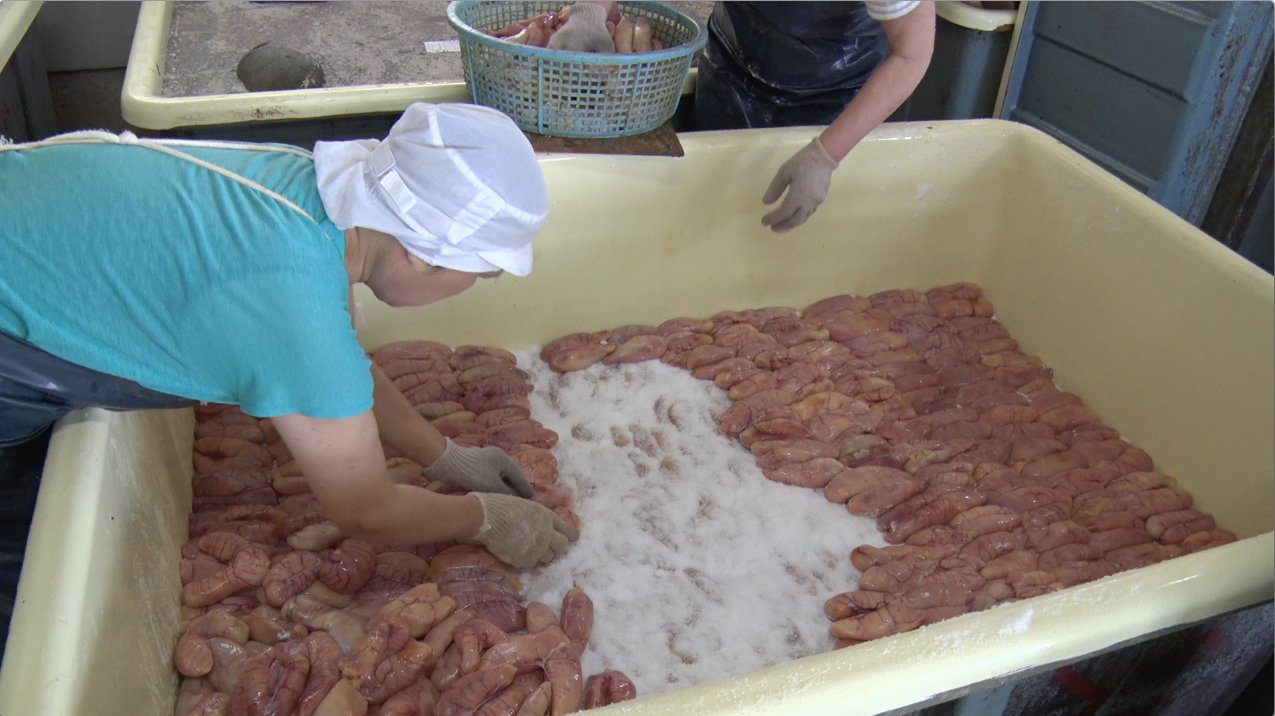
A traditional Ishikawa Prefecture dish of pickled fugu ovaries, which are just as dangerous as the liver. The only way to make them edible is this traditional method of fermenting them for over three years in brine and rice bran. (© Gun Fish Film Partners)
But in 2004, a Nagasaki University research team investigating fugu poison succeeded in making farm-raised fugu poison-free, leading to an article in the English-language science magazine Nature. If fugu liver became safe to eat, it would surely mark a watershed moment in Japanese food culture.
Saga Prefecture sought to leverage this breakthrough in a local revitalization scheme. It applied to the MHLW for special certification as a Fugu Liver Zone, where people would be allowed to sell and eat nonpoisonous farmed fugu liver. Predictably, the National Fugu Federation and the city of Shimonoseki opposed the effort, saying a single accident could destroy trust in the nation’s fugu cuisine as a whole. The scheme has been rejected three times by the ministry and abandoned entirely.
The documentary takes up this liver-eating debate, introducing both the pro and anti sides as it explores the current state of fugu cuisine in Japan.
”I think if fugu weren’t poisonous, we wouldn’t have a movie. I see a certain Japanese-ness expressed in the opposing values that the debate brings to light. I wanted to show both sides equal respect, so I labeled them the ‘adventurers’ and the ‘custodians.’ Neither side is good nor bad; each is taking the stance of following through on their claims and their beliefs. And I find that really cool.”
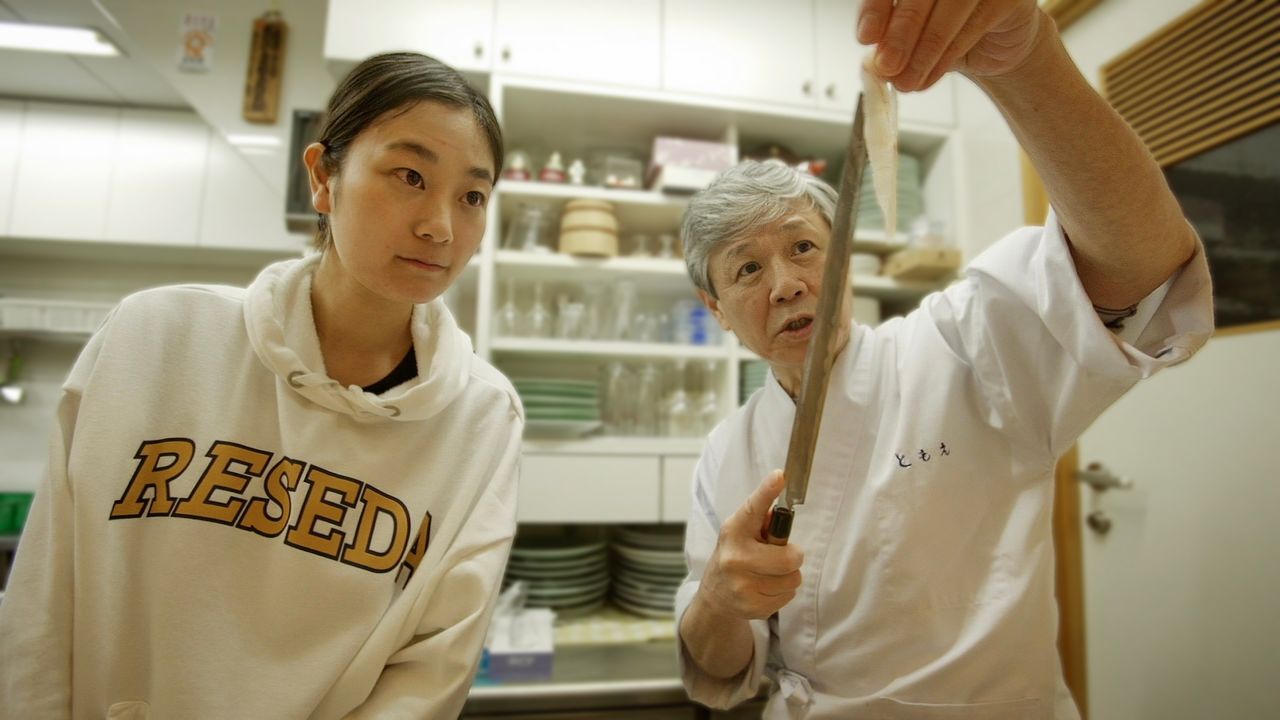
Kamei Kazuhiro (right), owner chef of Kyoto restaurant Fugu Ryōri Tomoe, demonstrates the technique of slicing fugu sashimi. (© Gun Fish Film Partners)
Betting Their Lives on Fugu
The film introduces people working with fugu in all sorts of roles, each one sharing their own love of the fish. Their positions are all different, but they share the same ideals of broadening the dishes using this unique fish, preserving the culture of its cuisine, and nurturing it for the future.
Says the director: ”When I was editing the film, I grew convinced that bringing all of these people together into one film was something only I could do. That is one of the biggest things I learned through all this.”
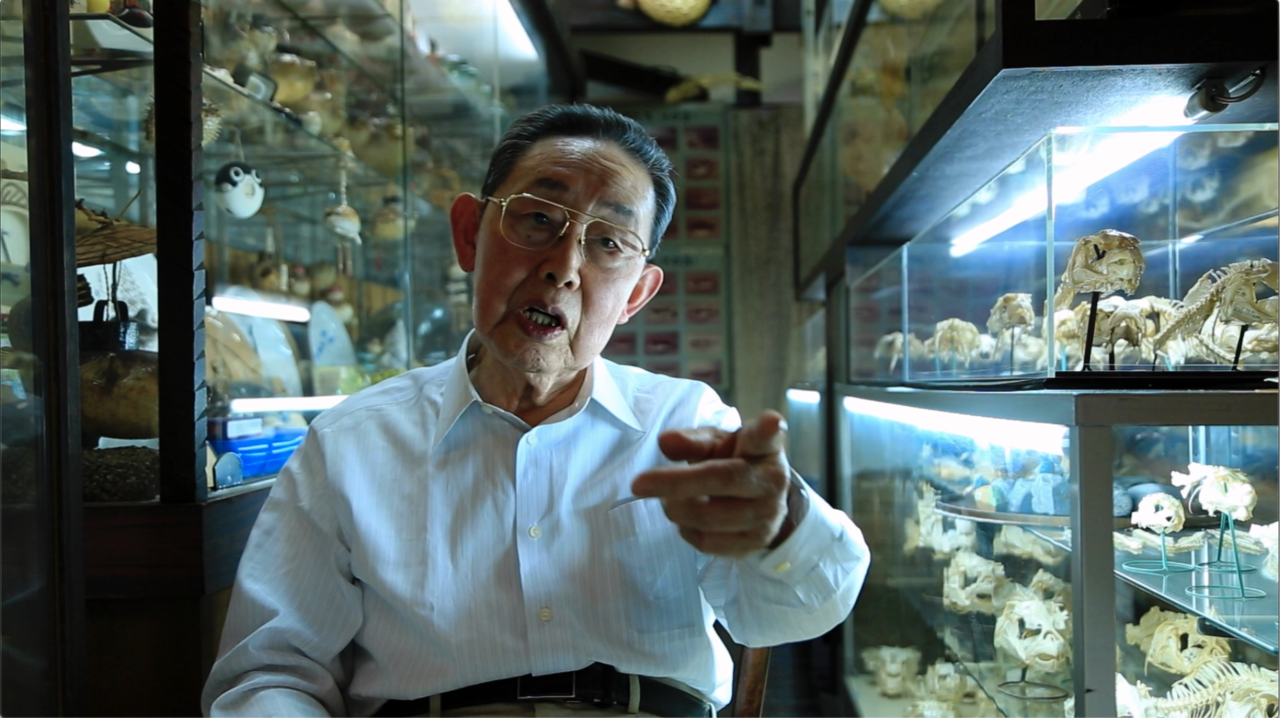
Kitahama Kiichi, owner of Osaka’s Kitahachi restaurant and founder of the Fugu Museum, is one of the world’s leading fugu researchers. He insists that “Fugu brings people together.” (© Gun Fish Film Partners)
In all, a decade passed from the start of filming until the documentary’s completion, spanning the COVID-19 pandemic.
Uno laughs: “Before I started looking into it, I had the same image of fugu as most, that it’s this poisonous, high-class fish. I never imagined I’d get so into it! This must be the true danger of fugu!”
Trailer (Japanese)
(Originally published in Japanese. Banner photo: Owner-chef Makita Yūichi of the venerable Tokyo fugu restaurant Ueno Santomo, founded in 1928. He also serves as the director of the National Fugu Federation. © Gun Fish Film Partners.)