Japan Timeline for September 2026
Newsfrom Japan
Science- English
- 日本語
- 简体字
- 繁體字
- Français
- Español
- العربية
- Русский
Long-Term Interest Rates at 30-Year High
1
The yield on 10-year Japanese government bonds reaches 3.000% at one point, its highest level in 30 years, amid speculation that both Japan and the United States will raise interest rates.
3
Unno Tokuji is awarded the Ig Nobel Prize in medicine for his aerodynamic study on how to blow one’s nose. Unno was professor emeritus at Asahikawa Medical University before he passed away in 2022. This is the twentieth successive year that a Japanese researcher has received the spoof prize.
6
Tamaki Yūichirō is elected for a third term as leader of the Democratic Party for the People, which he founded, and states his intention of preparing to win power during the three years of his term.
7
The Yokohama city assembly unanimously approves the resignation of Mayor Yamanaka Takeharu after a third-party legal investigation confirmed he had engaged in workplace harassment against senior officials. Yamanaka submitted a letter of resignation on August 28; he later announced that he will run in the October 18 election to choose a new mayor.
9
The Centrist Reform Alliance announces that it will disband. One member will remain to complete necessary procedures, while its members formerly from the Constitutional Democratic Party of Japan and Kōmeitō leave the party, although they will form a unified group in the House of Representatives.
Baseball star Harimoto Isao dies at the age of 86. His record for the most career hits in Japanese professional baseball still stands, and he was also known as a peace advocate, sharing his recollections of surviving the atomic bombing of Hiroshima at the age of five.
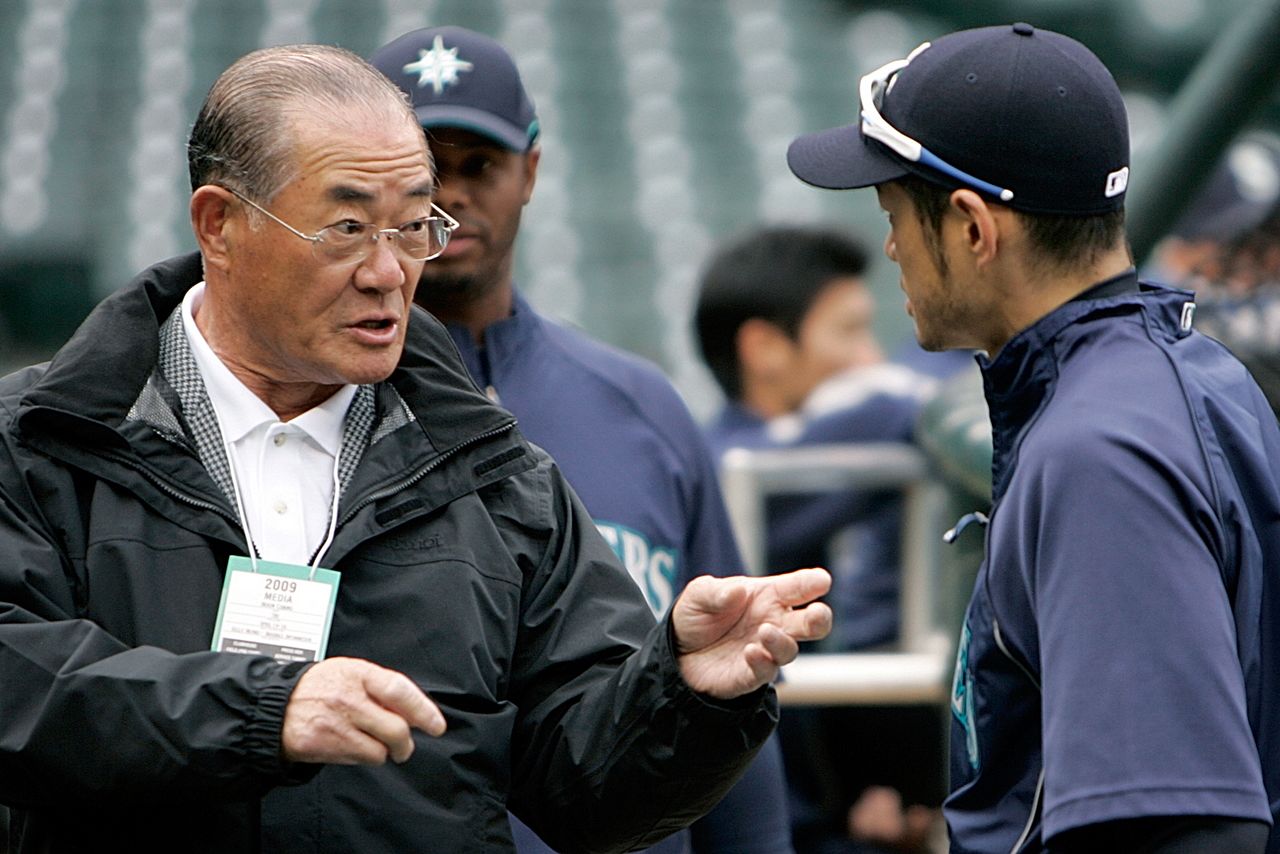
Harimoto Isao talking with Suzuki Ichirō in Seattle in April 2009. (© Jiji)
Professor Yanagisawa Masashi of the University of Tsukuba is among four Japanese researchers to win the Lasker Award. Yanagisawa discovered the brain peptide orexin, which led to the development of treatments for insomnia. Three researchers from Chūgai Pharmaceutical are recognized for their development of a hemophilia treatment.
11
The Digital Agency announces that personal information related to 240,000 government officials and related personnel may have been leaked following unauthorized access.
13
First-time candidate Koja Genta defeats Tamaki Denny to win the Okinawa gubernatorial election. Tamaki had opposed the relocation of the US Futenma Air Station to Henoko in Nago, but Koja, who was endorsed by the Liberal Democratic Party, supports the move.
14
Chūbū Electric Power announces that President Hayashi Kingo and Chairman Katsuno Satoru will step down at the end of September after a scandal involving falsified data. It withdraws its application to restart two reactors at its Hamaoka Nuclear Power Station in Shizuoka Prefecture.
15
Japan’s official benchmark land prices are released; they increase for the fifth consecutive year. Nationwide, average prices rise 1.0% for residential land and 2.9% for commercial land, for a pace of growth roughly on par with the previous year.
17
Prime Minister Takaichi Sanae reshuffles her cabinet, retaining most of her senior ministers. She appoints a minister from LDP coalition partner Ishin no Kai for the first time. Other ministers include lawmakers involved in the LDP slush fund scandal.
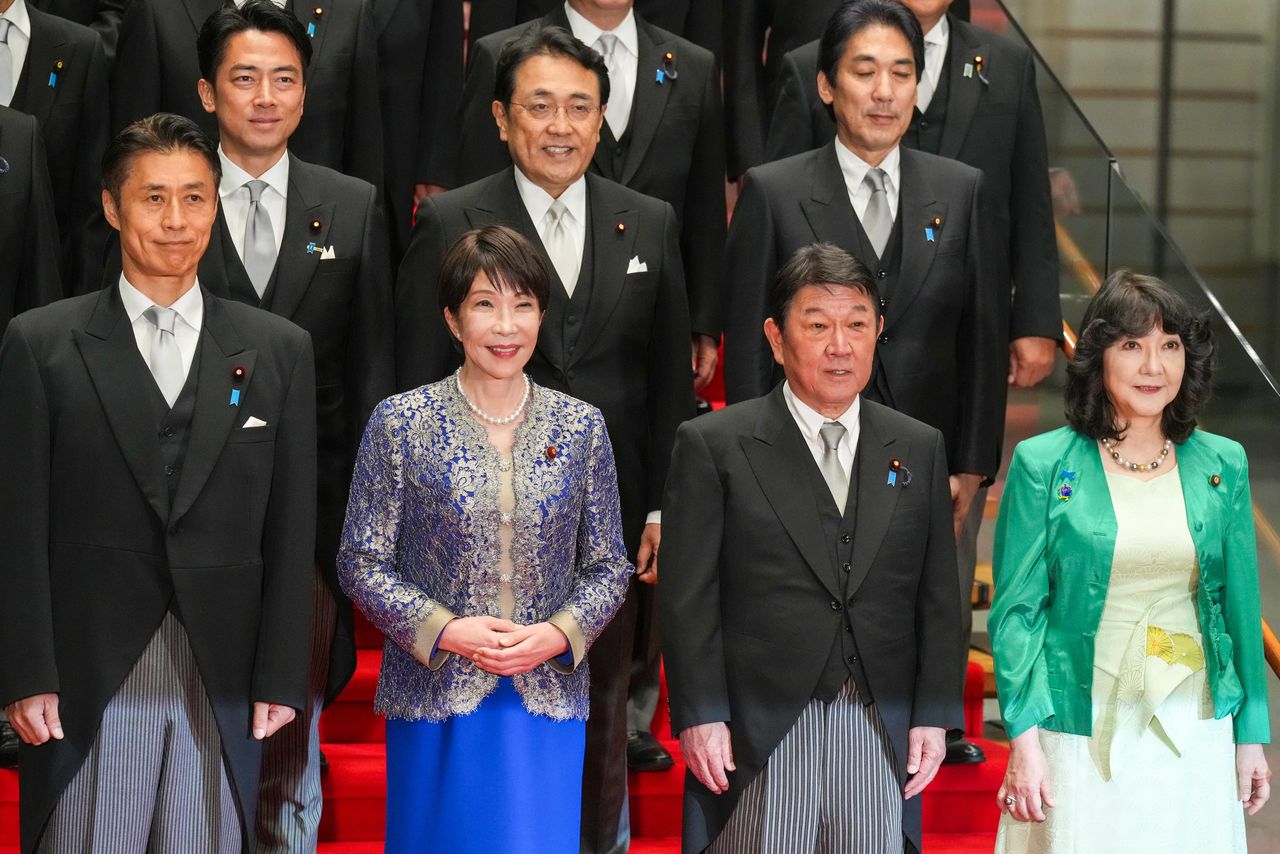
Prime Minister Takaichi Sanae (front row, second from left) with members of her reshuffled cabinet. (© Zuma Press Wire via Reuters Connect)
18
The Bank of Japan decides at its policy meeting to raise its policy rate from 1.0% to 1.25%. This comes three months after its previous rate hike.
Kuramoto Sō, known for writing the scripts for television dramas including Kita no kuni kara (From the Northern Country), dies at his home in Furano, Hokkaidō, from multiple organ failure at the age of 91.
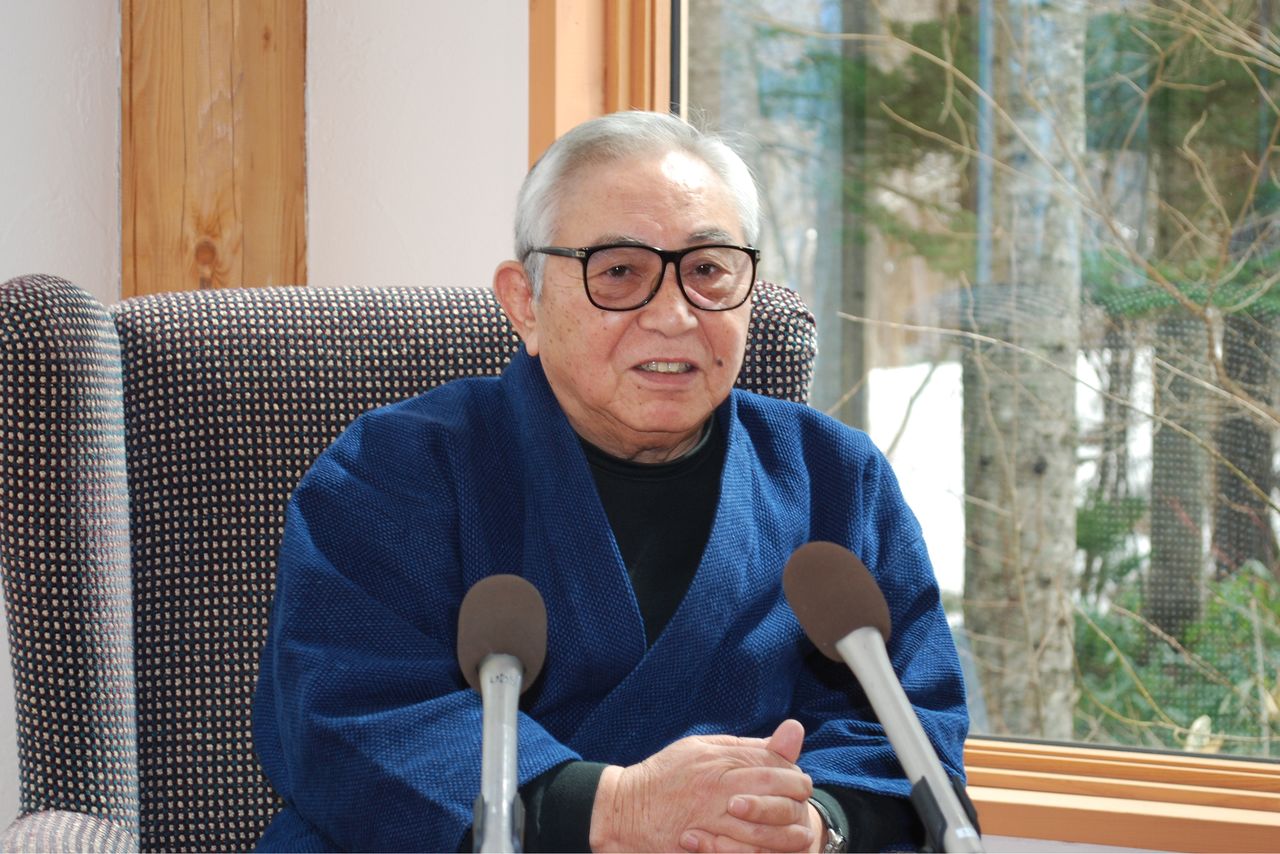
Kuramoto Sō in April 2010. (© Jiji)
19
The Asian Games begins in Nagoya. This is the third time for Japan to host the games, after Tokyo in 1958 and Hiroshima in 1994. Athletes from 45 countries and regions participate, as well as a refugee team.
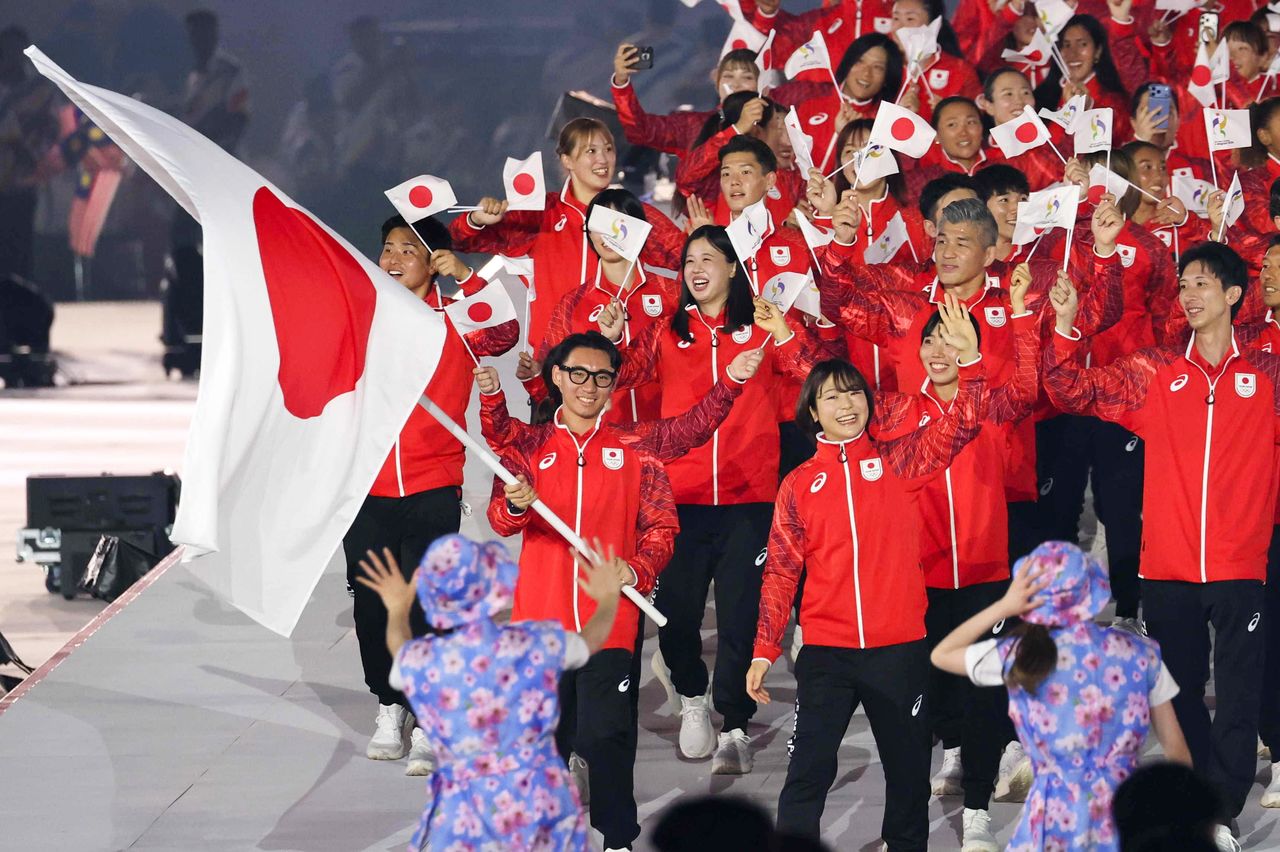
Japan’s Asian Games delegation at the opening ceremony in Paloma Mizuho Stadium in Nagoya. (© Jiji)
21
Typhoon Dujuan approaches the Kantō region, leading to landslides in Chiba and Kanagawa Prefectures. In northern Chiba, a levee breach at Lake Inba causes widespread flooding. As of September 28, 14 fatalities are confirmed with 1 person still missing.
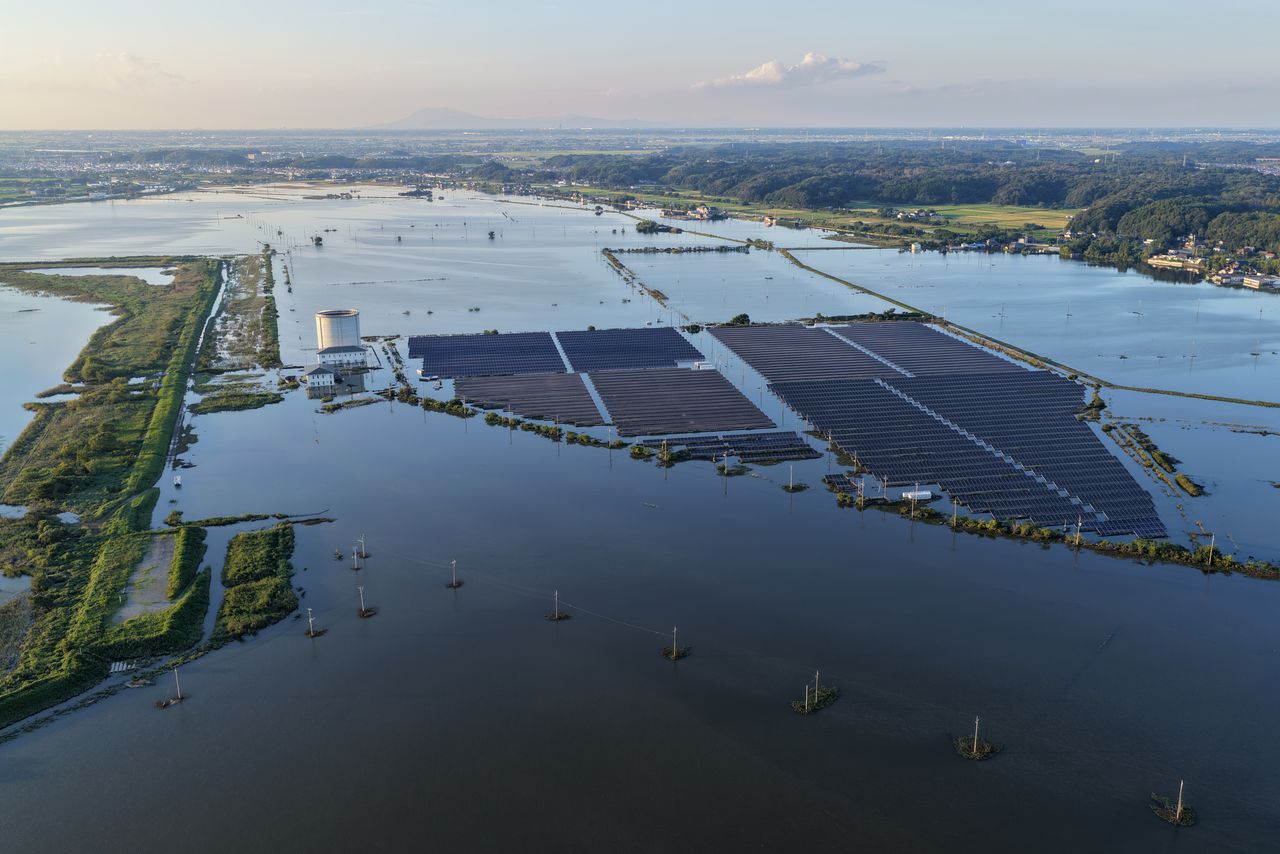
The Lake Inba levee breach submerged solar panels. Photograph taken by drone. (© Jiji)
22
Prime Minister Takaichi speaks with US President Donald Trump ahead of Trump’s summit with Chinese President Xi Jinping. The two leaders discuss issues concerning China, including economic security. They also speak about the International Criminal Court, which Japan expressed support for after it was targeted by Trump.
24
The 17-year-old swimming phenomenon Ōhashi Shin sets a world record for the men’s 200-meter breaststroke with a time of 2:04.83 at the Aichi-Nagoya Asian Games. He previously won gold in the 100-meter event. Japan also wins its first gold medal in the men’s table tennis team event for 60 years, defeating powerhouse China in the final. On September 26, 11-year-old elementary school student Kurihara Yūki wins esports gold for the puzzle game Puyo Puyo.
25
Tokyo District Court rules that Public Offices Election Act provisions banning people under the age of 18 from participating in election campaigning are unconstitutional, stating that the restriction cannot be recognized as necessary or reasonable. However, the court rejects claims for state compensation from the four plaintiffs in the relevant case.
28
The University of Tokyo announces that it has selected Professor Fujigaki Yūko to become its first female president. Her six-year term is set to begin on April 1, 2027.
29
Rain is reported at the Japan Meteorological Agency’s central Tokyo observation station, bringing the streak of consecutive rainy days in the capital to a new record of 34, or the longest continuous period of precipitation since data collection began in 1886.
Cuorips, a start-up linked to the University of Osaka, announces that it has transplanted heart muscle cell sheets made from iPS cells into a severe heart failure patient in her fifties, in the world’s first medical treatment using an approved iPS cell-derived regenerative therapy.
(Translated from Japanese. Banner photo: Japan’s Asian Games gold medal winners include Kurihara Yūki, at left, for the Puyo Puyo esports event; Ōhashi Shin, at top right, pictured during his record-breaking 200-meter breaststroke race; and the national table tennis team, at bottom right. All photos © Jiji.)