Building Blocks: The Basic Ingredients Behind Japan’s Flavors
Kanpyō: The Versatile and Delicious Ingredient that Ties Japanese Cuisine Together
Food and Drink Culture Lifestyle- English
- 日本語
- 简体字
- 繁體字
- Français
- Español
- العربية
- Русский
Links to Art and Literature
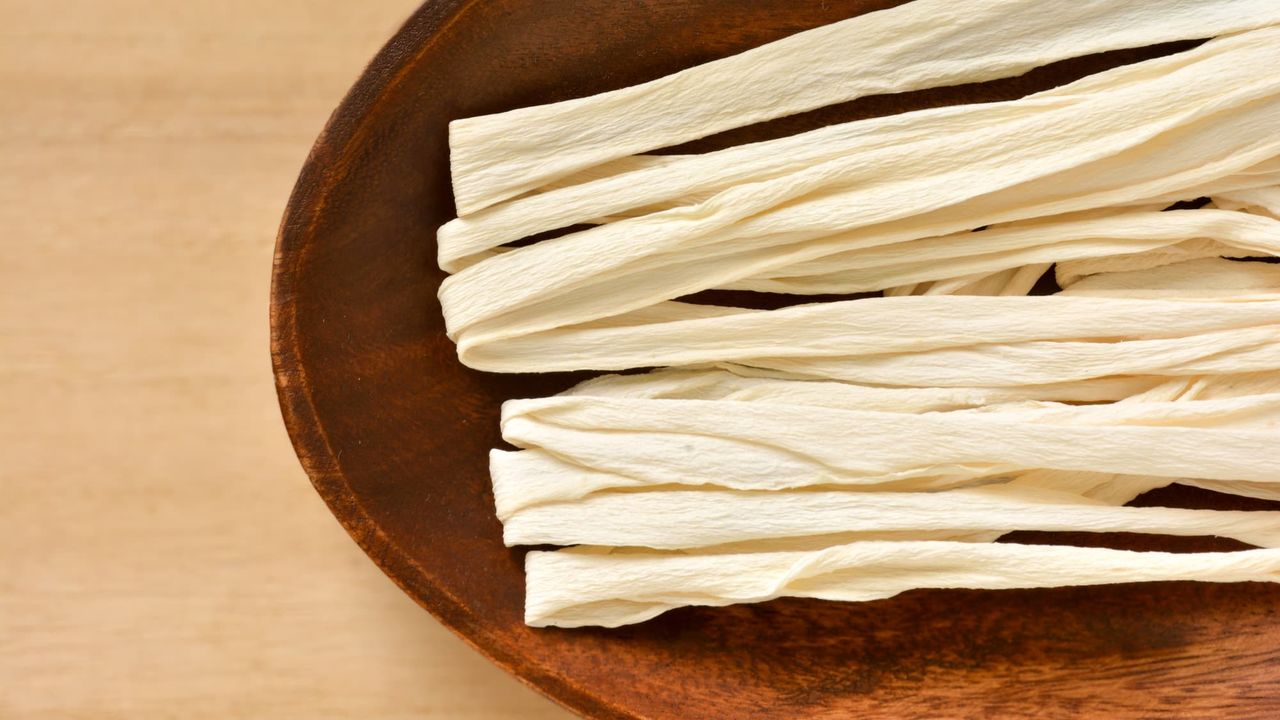
Kanpyō, as its Japanese name suggests, is literally “dried gourd.” It is produced by taking the fruit of the yūgao, or bottle gourd (Lagenaria siceraria), and shaving it into long, thin strips, which are then dried.
The yūgao, native to Africa and tropical Asia, is often referred to as “moonflower” in English as it produces white flowers that bloom in the evening. The tenth century poet Sei Shōnagon described the flowers in her work The Pillow Book as follows (in the translation by Meredith McKinney): “The moonflower is similar to the morning glory, and when we speak of the two together, it suggests that the flower is indeed a charming one—but it is a great pity about the plant’s long gourd pods.” It is further mentioned in The Tale of Genji, where Yūgao is depicted as a woman with whom the young Hikaru falls in love and has a relationship. Very likely, this fruit was already being widely cultivated during the Heian period (794–1185).
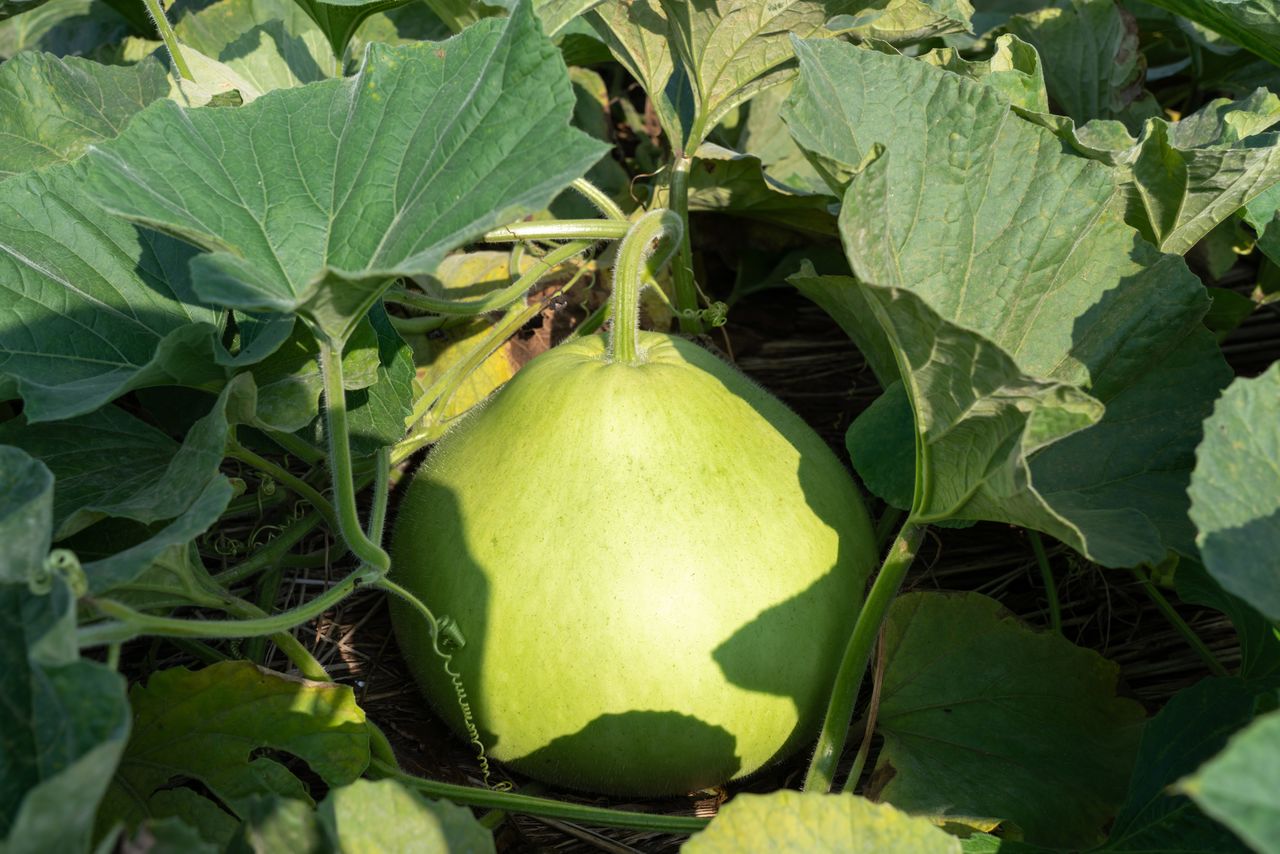
The fruit of the yūgao can weigh as much as six to seven kilograms. (© Pixta)
It is believed that the process of making kanpyō began around the fifteenth century in the city of Osaka. Up until the Meiji era (1868–1912), it was mainly produced in the Kansai region in western Japan. The scene in Utagawa Hiroshige’s ukiyo-e woodcut print Minakuchi, from his series The Fifty-Three Stations of the Tōkaidō, shows women in an idyllic rural landscape, working together to make kanpyō. Minakuchi is now in Kōka, Shiga Prefecture.
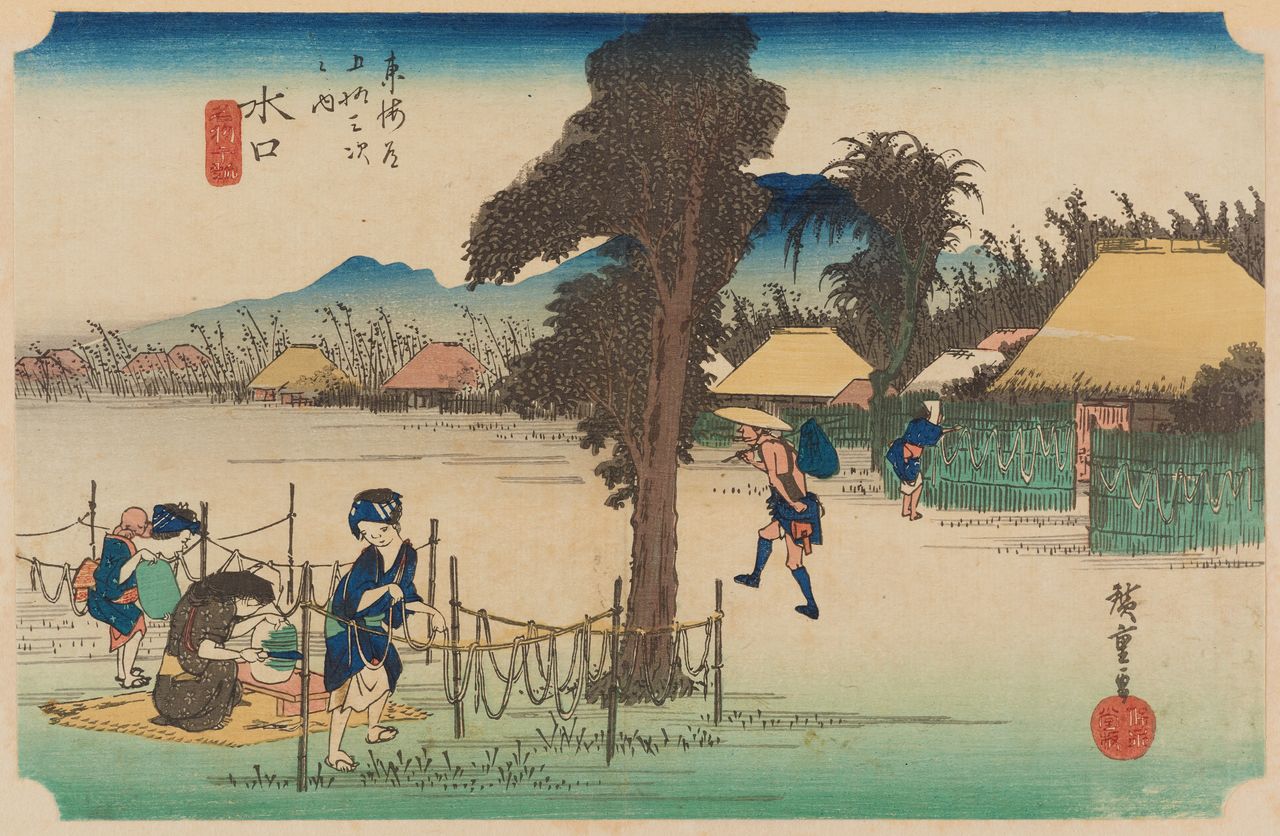
Utagawa Hiroshige’s Minakuchi, from his woodcut print series The Fifty-Three Stations of the Tōkaidō. (Courtesy ColBase)
These days, 98% of kanpyō is produced in Tochigi Prefecture in eastern Japan. This is believed to be because when the shogunate transferred the daimyō of Minakuchi to Mibu in what is now Tochigi, he brought yūgao seeds cultivated in Minakuchi with him.
The fruit is harvested between June and August, and the sight of kanpyō strips being sun-dried is a quintessential summer scene in Tochigi.
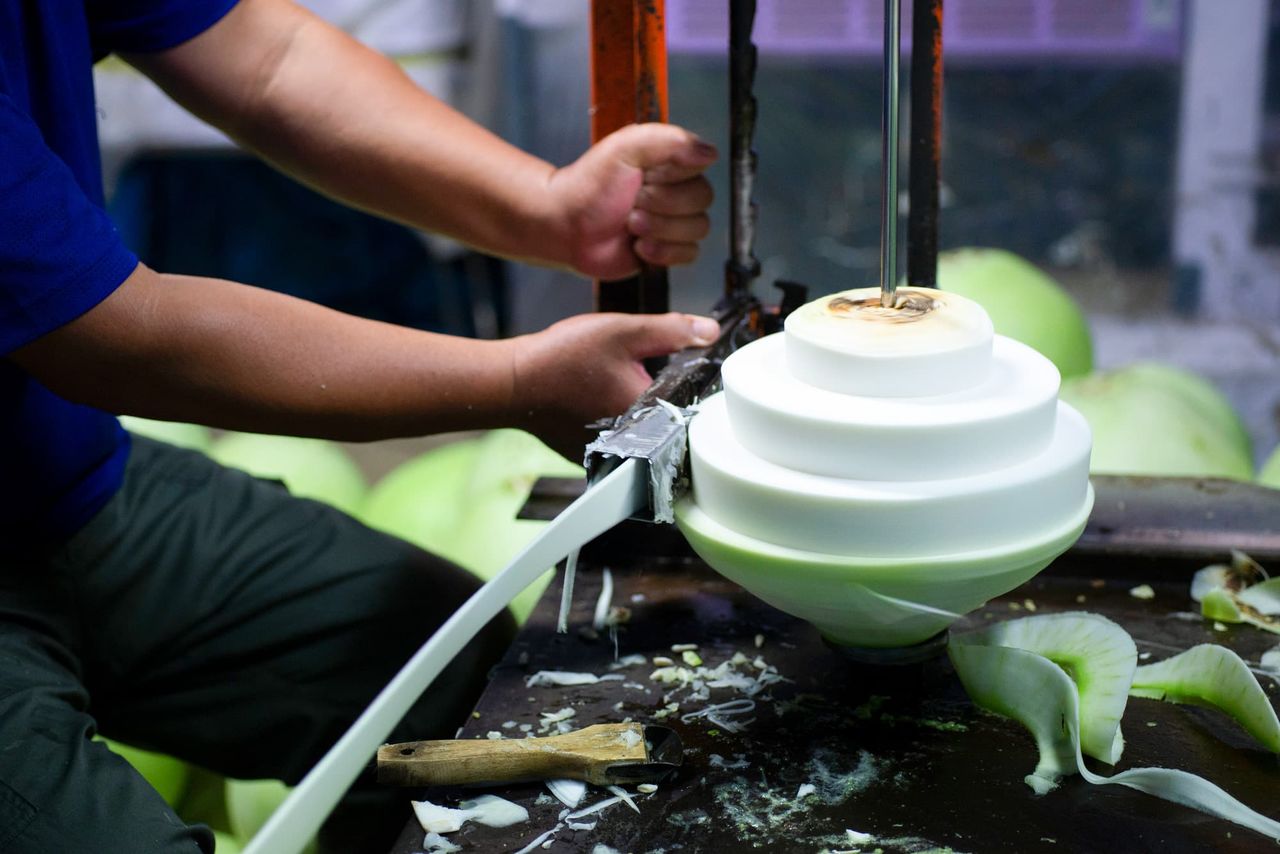
The long, thin strips are created by mounting the gourd on a motor-driven rod and shaving it with a special planer-style blade as it rotates. (© Pixta)
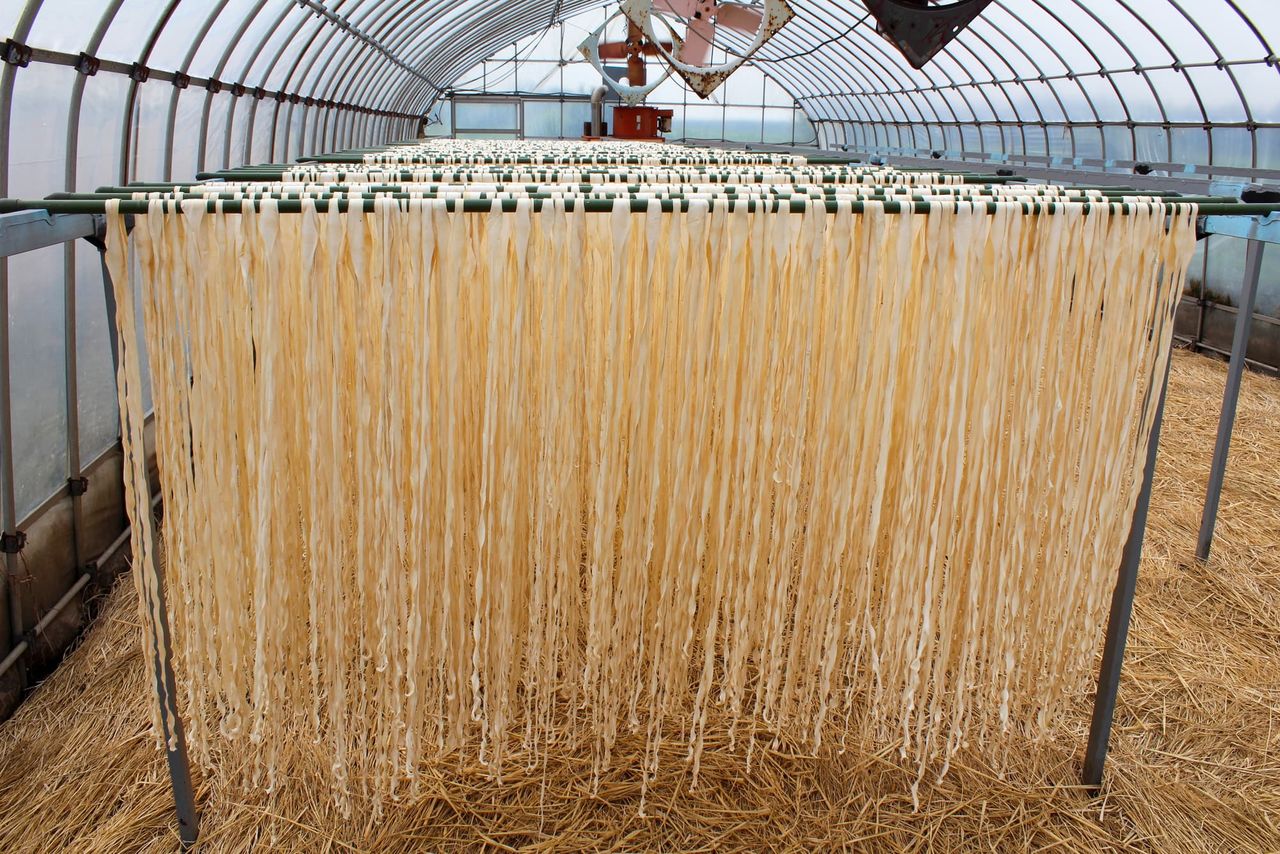
While the strips were traditionally hung out to dry in the sun, it is now more common to dry them in greenhouses using fans, so they are not affected by weather conditions. (© Pixta)
Kanpyō itself has a mild, indistinct flavor. When rehydrated with water, it is tender and moist, with the ability to absorb other flavors well.
Here are a few ways that kanpyō is used in Japanese dishes.
Makizushi
Kanpyō that has been simmered in a sweet-and-savory broth mixed with soy sauce and sugar is a classic ingredient in sushi rolls. In the Kantō region, it is used as a single filling for thin hosomaki rolls, whereas in the Kansai region, it is more often combined with a variety of other ingredients to create thick futomaki rolls.
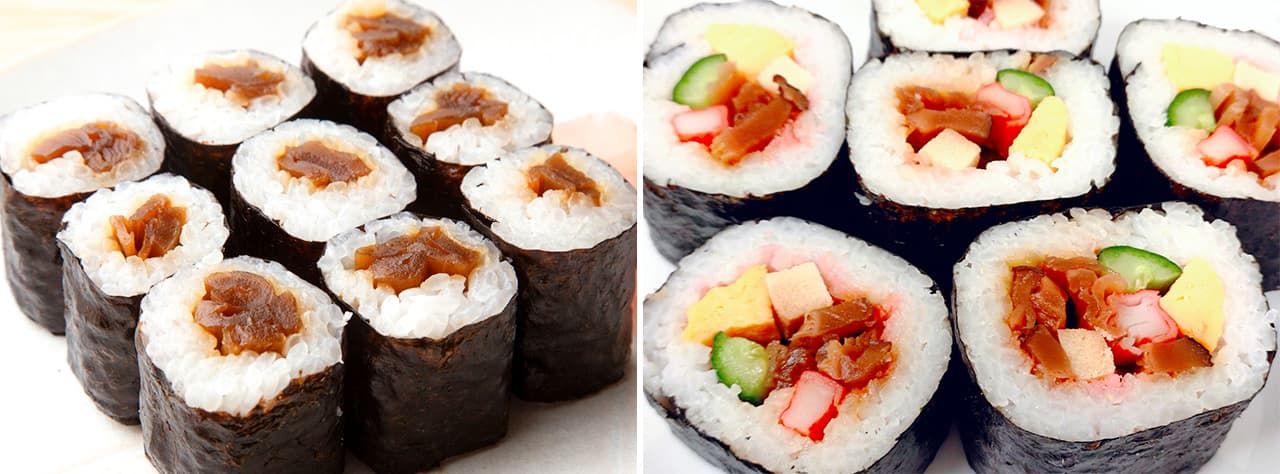
Hosomaki sushi rolls on the left (© Pixta), futomaki on the right. (© PhotoAC)
An Edible String?
As the strips are so long and versatile, they are excellent as a way to tie ingredients together, just like string. This can be seen with classic Japanese dishes like konbumaki kelp rolls and mochi kinchaku fried tōfu pouches, as well as stuffed cabbage rolls simmered in consommé stock or tomato sauce. Kanpyō’s mild flavor means it pairs well with many Western-style dishes too.
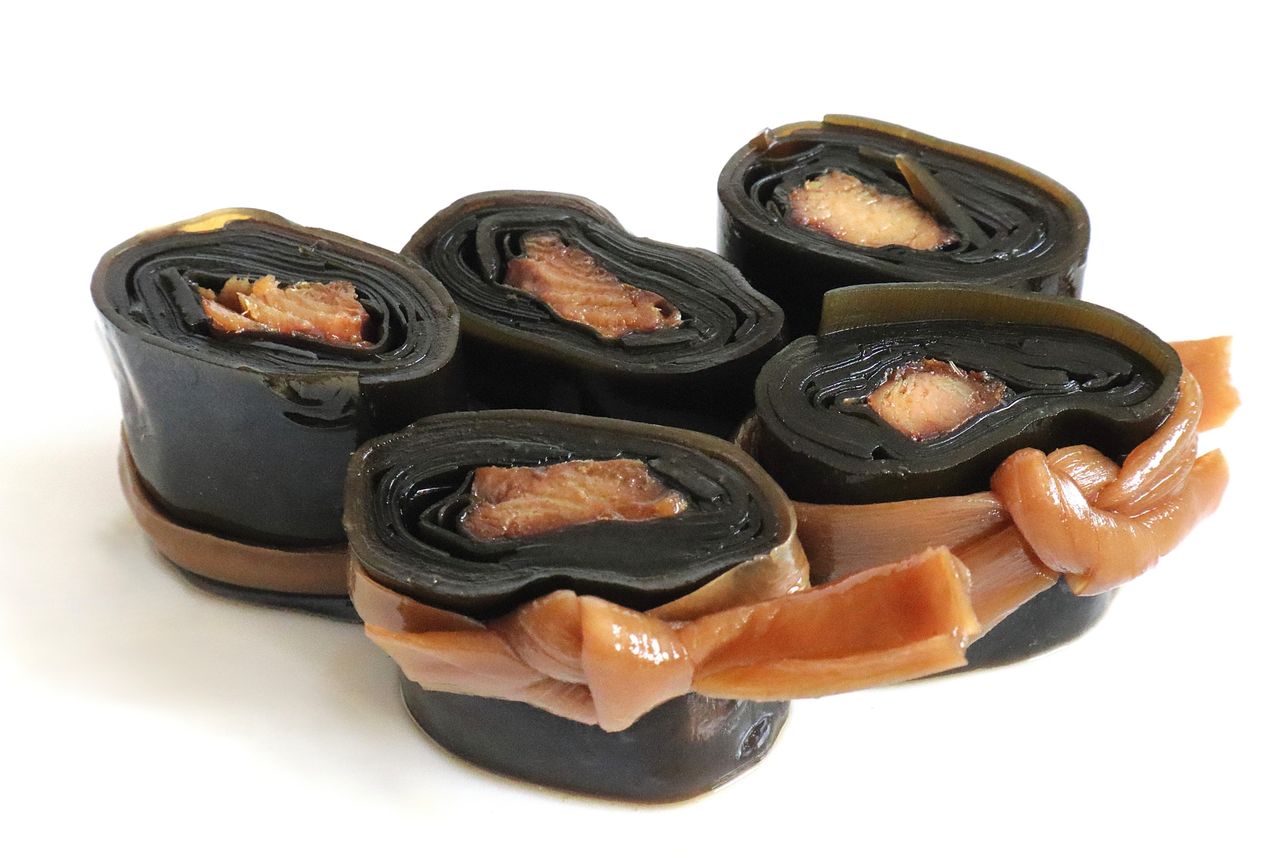
Konbumaki kelp rolls. (© PhotoAC)
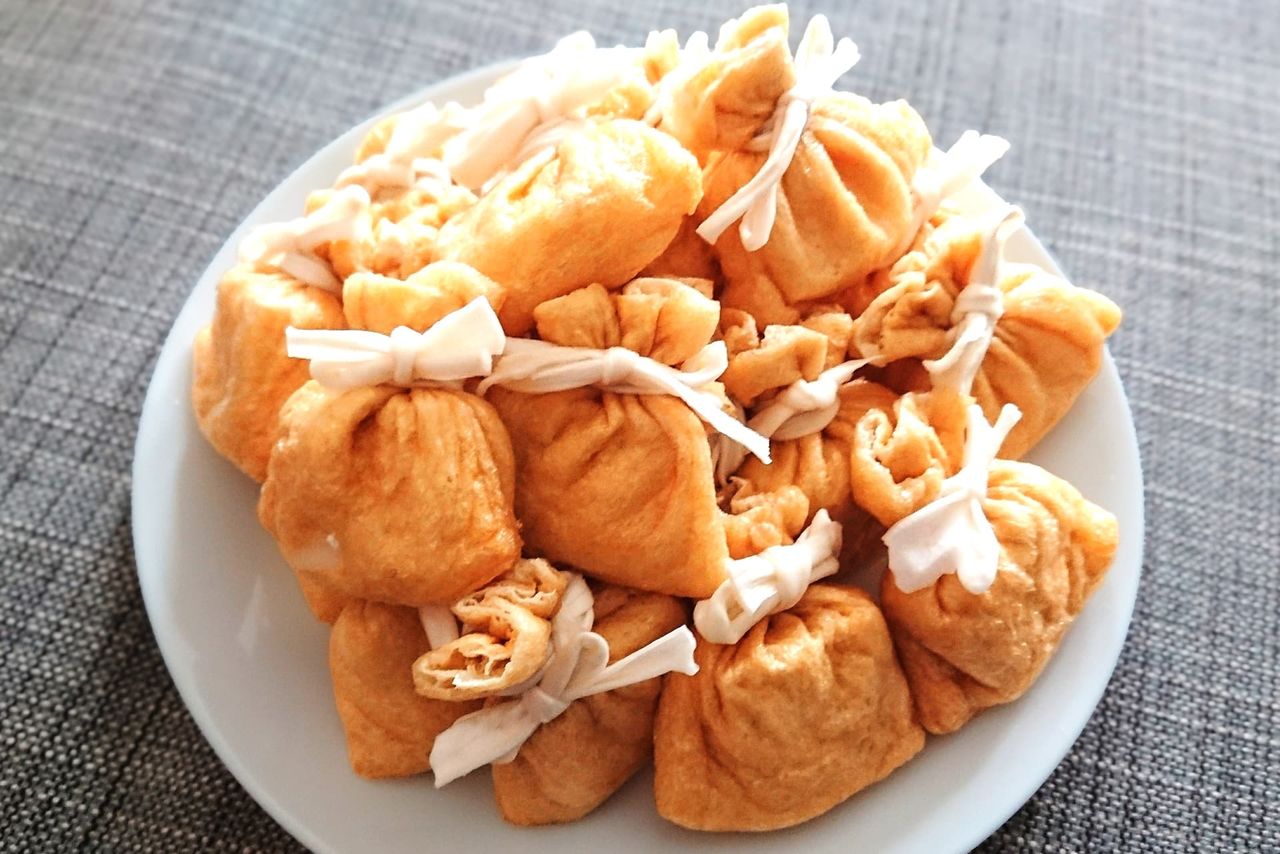
Mochi kinchaku fried tōfu pouches. (© PhotoAC)
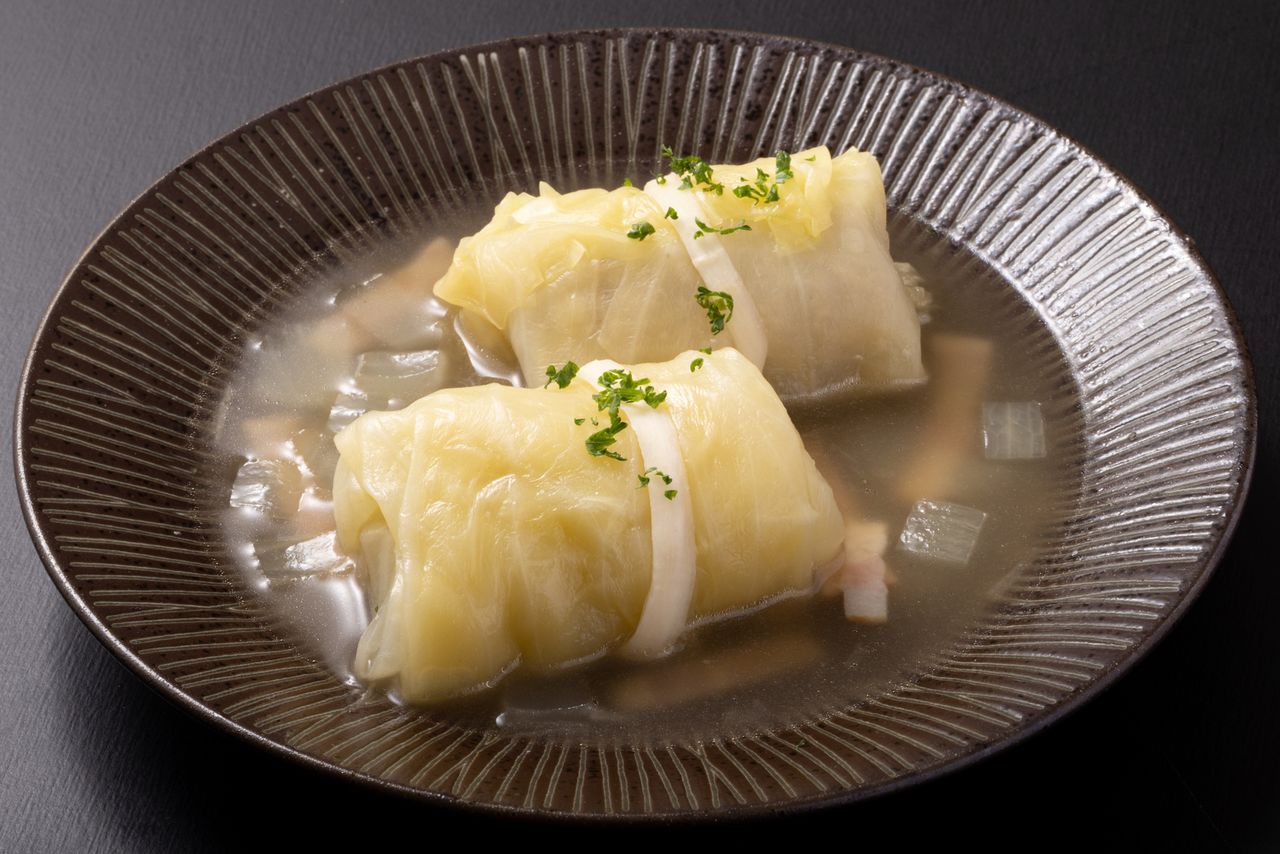
Cabbage rolls tied with kanpyō. (© Pixta)
Data Sources
- Basic information about kanpyō (Japanese) from Tochigi Prefecture Kanpyo Commercial Cooperative Association
(Originally published in Japanese. Text by Ecraft. Banner photo © Pixta.)