


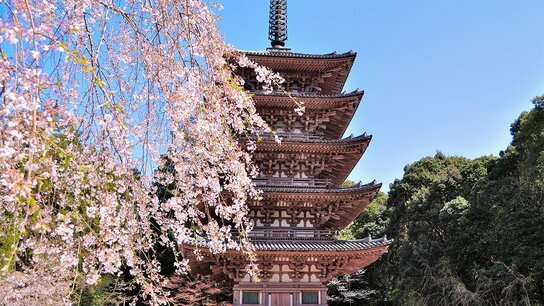
Daigo-ji is a World Cultural Heritage site that has been renowned for its cherry blossoms since the Heian period. Because its shidarezakura (weeping cherry), somei yoshino, yaezakura, and other varieties flower at different times, the temple has a very long hanami season.
Sengoku-period leader Toyotomi Hideyoshi hosted a lavish hanami party and procession at Daigo-ji in 1598, for which he planted 700 additional cherry trees and ordered the renovation of various buildings and the laying out of gardens. The Sanbōin garden, which he designed, has been designated a national historic site and place of scenic beauty, while the Omote-Shoin (main drawing room) from where the entire garden can be viewed, has been cited as one of the finest examples of Momoyama architecture and named a national treasure. The tea party is reenacted each year as Hōtaikō Hanami Gyōretsu (Hideyoshi’s Hanami Parade) on the second Sunday of April.
Daigo-ji (Kyoto)
- Varieties: Shidarezakura, somei yoshino, yaezakura, etc.
- No. of trees: 1,000
- When: Late March to early April
- Hours: Shimo Daigo (Sanbōin, Reihōkan, main hall, and pagoda) 9:00–17:00 (closes at 16:30 December–February); Kami Daigo (upper Daigo) 9:00–16:00 (closes at 15:00 December–February)
- Admission: Shimo Daigo ¥1,500 (March 20 to May 15; October 15 to December 10), ¥800 at other times; Kami Daigo ¥600
- Address: 22 Daigohigashiōjichō, Fushimi-ku, Kyoto
- Website: Daigoji Temple
Related article
Nearby hanami sites
- Arashiyama
- Ninna-ji Temple
- Kasagiyama Natural Park
- Kyoto Gyoen National Garden: A Stroll Among the Cherry Trees
- Kurumazaki: Kyoto’s “Cherry-Blossom Shrine”
- Keage Incline: Disused Kyoto Rail Line Now a Spot for Sakura Lovers
- A Lone Cherry in a Zen Garden: Kyoto’s Kōdaiji
- Maruyama Park and the Weeping Cherry of Gion
- Memories of the Ancient Imperial Court at Kyoto’s Heian Jingū
- Kyoto’s Ninnaji: Pagoda in a Sea of Blossoms
- A Blossom-Viewing Stroll Along Kyoto’s Philosopher’s Walk
Near Daigo-ji Temple
- Foreign Tourists Flock to the Gates of Fushimi Inari Shrine
- The Million Yen Temple Experience: Kyoto’s Ninnaji
- Best Kyoto Spots for Ume Flower Viewing: Kitano Tenmangū, Jōnangū, and Umenomiya Taisha
- Amanohashidate: The Flying Dragon of “Kyoto by the Sea”
- Getting Around Kyoto: The Randen, Eizan, and Sagano Scenic Railways
- Kyoto’s Yasaka Shrine Combines Elements of Shintō and Buddhism
- Kyoto’s World Heritage: Kamigamo and Shimogamo Shrines
Sakura 100: Japan’s Best Blossoms
(Translated from Japanese. Banner photo © Pixta.)



 Read in other languages