


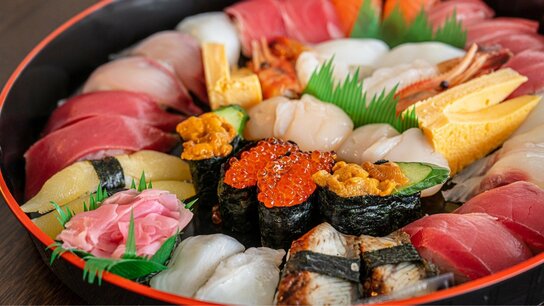
Japanese cuisine is a major draw for inbound tourists, but it is today popular across the globe. A recent survey sheds light on sushi and the other foods Japanese people hope to see enjoyed—in their authentic forms—all around the world.
Sushi Reigns Supreme
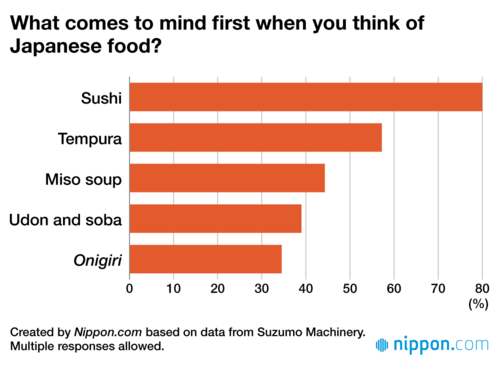
What is the first food that comes to mind when you hear the phrase “Japanese food”? According to a mid-September survey, at 80.0%, the top response by far was sushi. The famous seafood treat ranked highest across all age groups, and a sky-high 88.3% of those in their sixties and over thought of this food first.
The survey was conducted by Suzumo Machinery, a manufacturer of sushi- and rice-serving robots, and targeted 600 people aged 20 and over. Following sushi in the top slot, tempura was second at 57.2% and miso soup third with 44.3%.

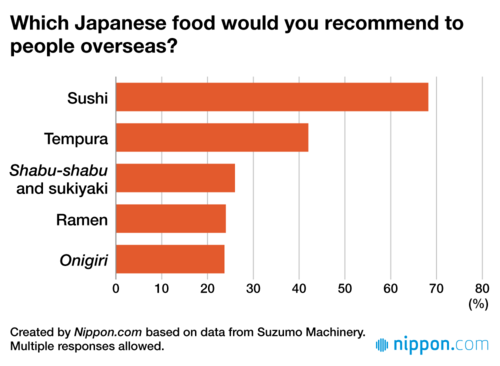
When respondents were asked what types of Japanese food they would recommend to people overseas, sushi (68.2%) and tempura (42.0%) again ranked highest. Rounding out the top five were shabu-shabu and sukiyaki (26.0%), ramen (24.0%), and onigiri (23.7%). Even though miso soup had ranked third as instantly thought of as Japanese food, here it fell to eighth place, with just 21.3% of respondents choosing it.
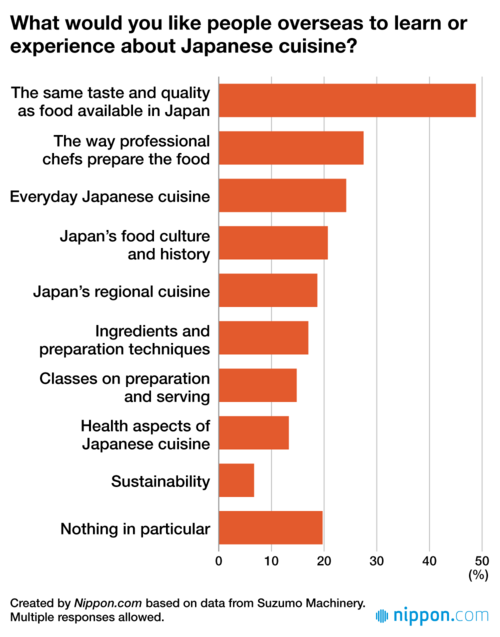
Respondents were also asked what they would like people overseas to learn or experience about Japanese cuisine. The largest group, at 48.8%, said they wanted foreign diners to be able to "eat food that has the same taste and quality as that in Japan." While this was felt by around 30% of those in their twenties, the rate increased with age, with 65% of those in their sixties and over hoping for this.
Sushi is increasingly popular overseas, but the challenge lies in providing "the same taste and quality as that in Japan" while also making it available at reasonable prices. When asked what should be prioritized, the results revealed that 70% in total thought “taste and quality” were more important, with 35.3% saying "even if it raises the price" and 34.5% stating it was "somewhat more important." On the other hand, only 15.8% overall thought that "reasonable prices" were better.
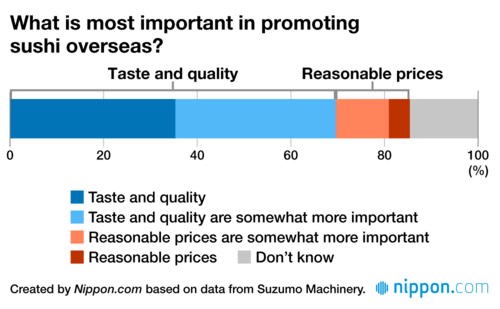
- Survey of Japanese foods that Japanese people recommend to foreigners (Japanese) in 2026.
(Translated from Japanese. Banner photo © Pixta.)



 Read in other languages