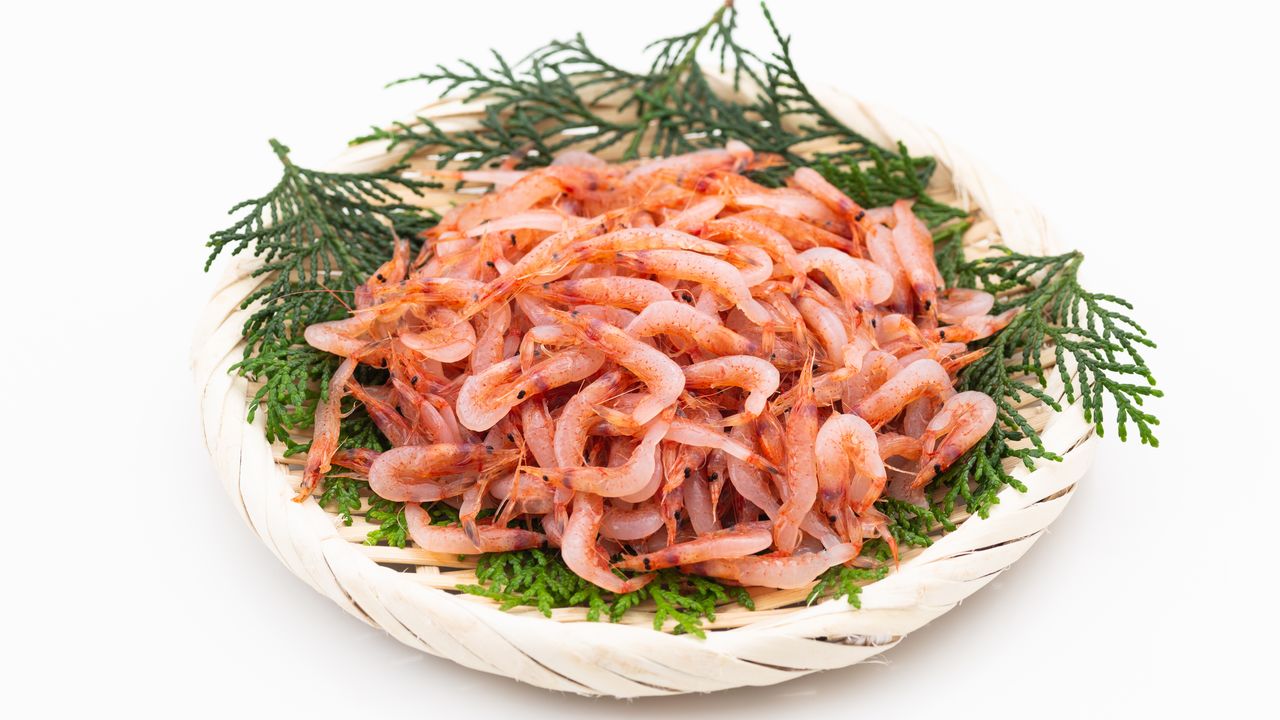
Building Blocks: The Basic Ingredients Behind Japan’s Flavors
Sakuraebi: The Sparkling Delicacy of Suruga Bay
Food and Drink Culture Lifestyle- English
- 日本語
- 简体字
- 繁體字
- Français
- Español
- العربية
- Русский
Tiny Glittering Lights on the Night Tide
Sakuraebi are tiny translucent pink shrimp that grow to around four or five centimeters in length and are packed with flavor. They inhabit Suruga Bay (Shizuoka), Sagami Bay (Kanagawa), and Tokyo Bay, but Suruga Bay is the only place where they are commercially fished. During the day, they stay at depths of 200 to 350 meters and then from the evening onwards rise to 20 to 60 meters below the surface, so fishing usually occurs at night to best take advantage of this habit. Possessing around 160 light-emitting organs that make them sparkle at night, it has led to them being called “jewels of the sea.”
As it is prohibited to harvest sakuraebi during their peak spawning period, June 11 through September 30, fishing is split into two seasons: spring (mid-March to early June) and autumn (October to December). Sakuraebi straight from the sea are plump and juicy, making them a delicacy that can only be enjoyed locally. When quick-boiled, they take on a soft, fluffy texture that pairs well with many dishes, including as a topping for salads and ohitashi (blanched, steeped vegetables), as well as an ingredient in dishes like dashimaki rolled omelet. Sakuraebi spoil easily though, so sun-drying them has long been a tradition. During the two fishing seasons, the banks of the Fuji River transform into a vivid pink carpet and the sight of Mount Fuji, Japan’s highest peak, provides a spectacular backdrop to this unique scene.
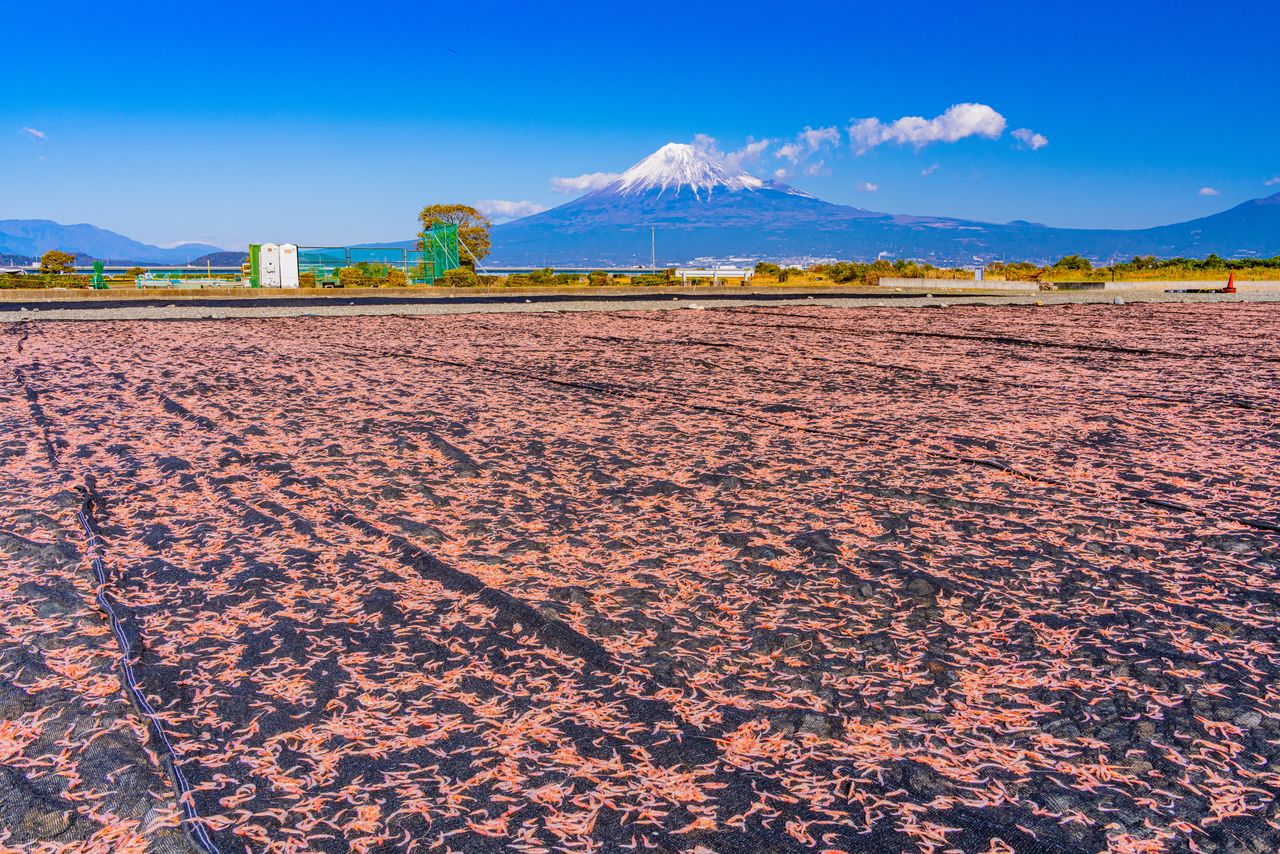
(© Pixta)
In recent years, catches of sakuraebi have been at record lows. Annual landings used to be between 3,000 and 5,000 tons, but in 2018 this volume fell sharply to 312 tons and the following year, it dropped further to around 100. A number of factors are believed to have caused this, including the increased turbidity of the Fuji River and a shift in the Kuroshio Current, which created a cold-water eddy that pushes juvenile shrimp out of the bay.
The local fishery cooperatives have put voluntary measures in place, such as suspending the autumn fishing season and limiting the number of boats that operate in the area, as well as the amount of time they can cast nets. Although a slight recovery has been seen since 2023, it is still far from the previous peak. This rarity truly makes sakuraebi “jewels.”
Below are just some of the ways that sakuraebi is put to work in the Japanese kitchen.
Gunkanmaki and Nishokudon
These two classic dishes are a great way to enjoy the special flavor of freshly-caught raw sakuraebi. Served as a sushi topping or accompanying raw shirasu (whitebait) on rice, the contrast of the translucent rosy pink is mesmerizing and you can taste the exceptional sweetness from the first bite. While advances in freezing techniques means that raw sakuraebi is now available in high-end Tokyo restaurants too, there is nothing better than enjoying them right where they were caught!
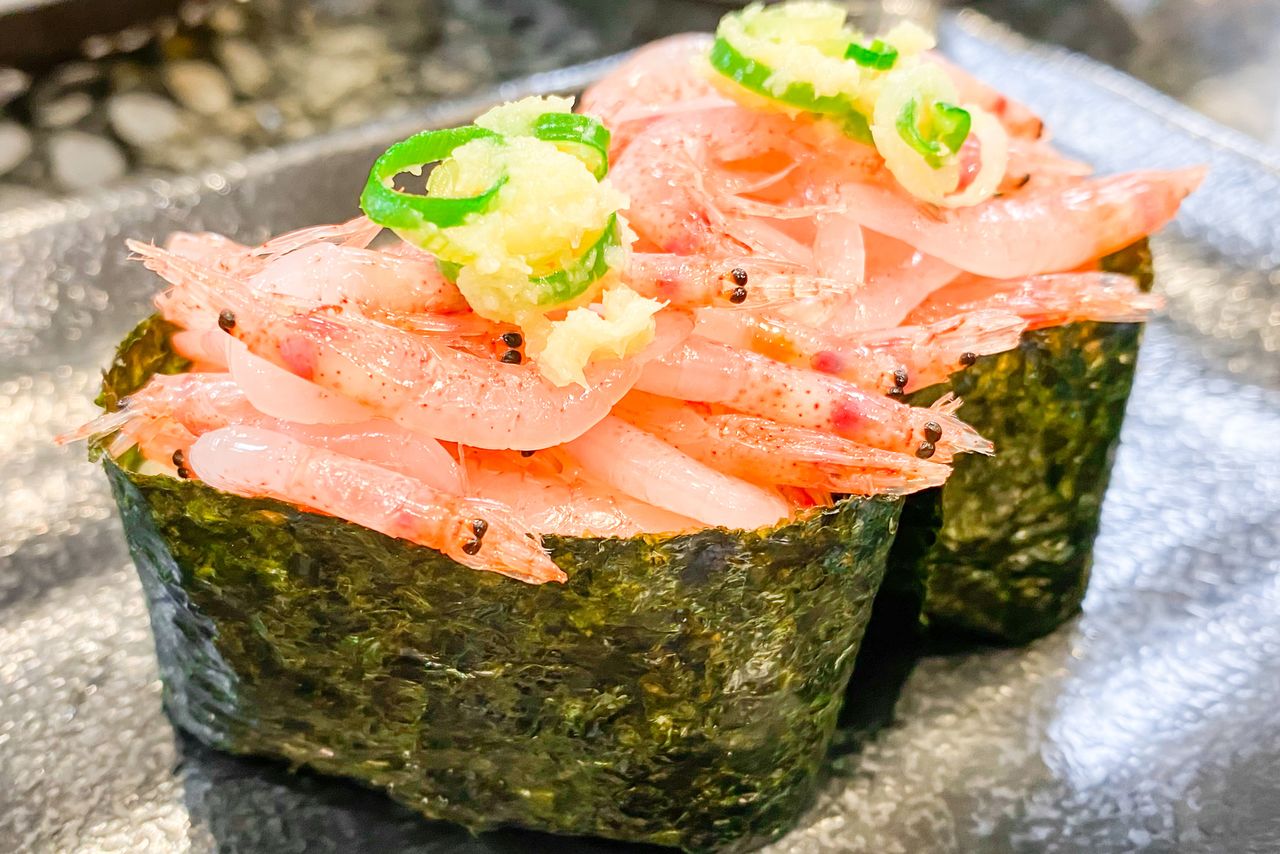
(© Pixta)
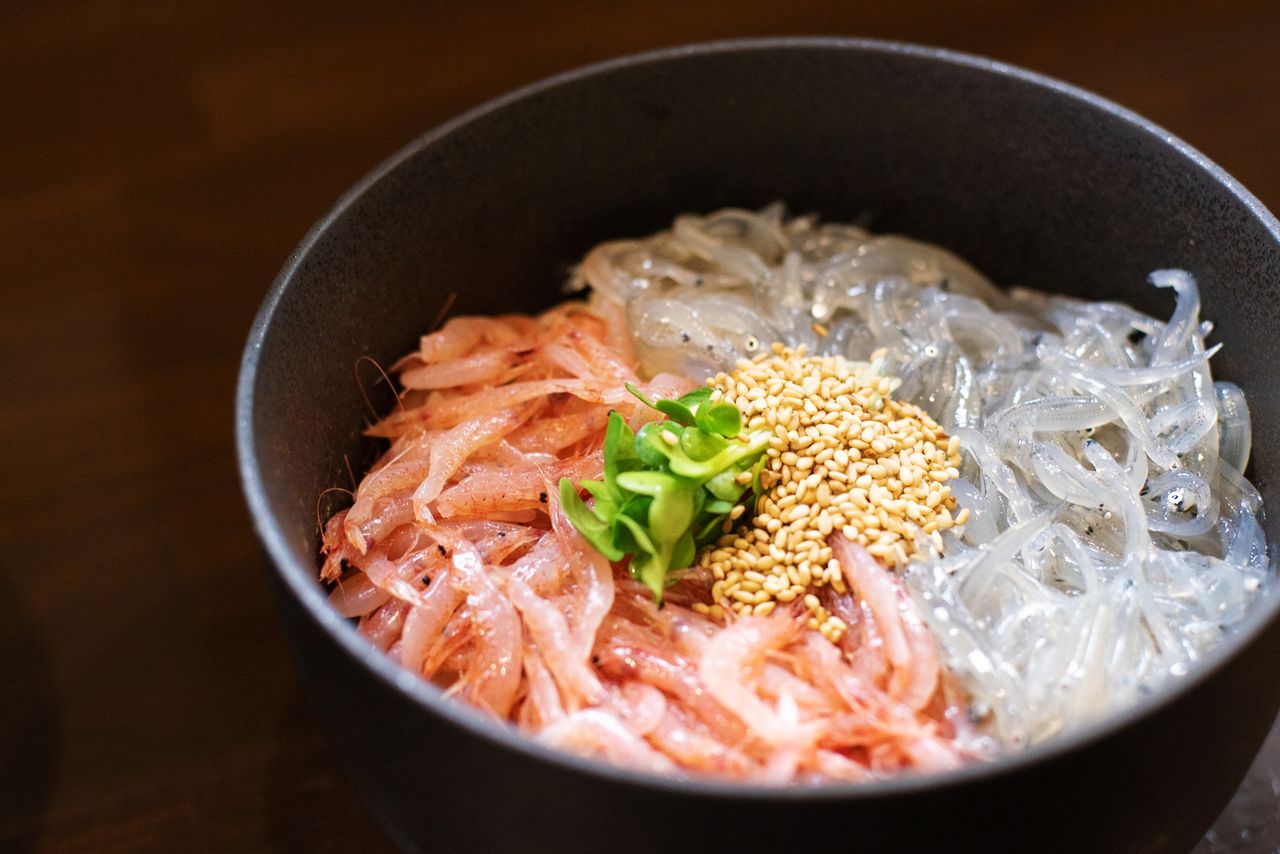
A rice bowl dish topped with freshly-caught sakuraebi and shirasu. (© Pixta)
Kakiage
This fritter, combining sakuraebi with thinly sliced onion and carrot, is a popular type of tempura. While it can be served as a topping on rice or soba, it is perfectly delicious by itself, simply salted, allowing you to enjoy its crispy texture and savory aroma.
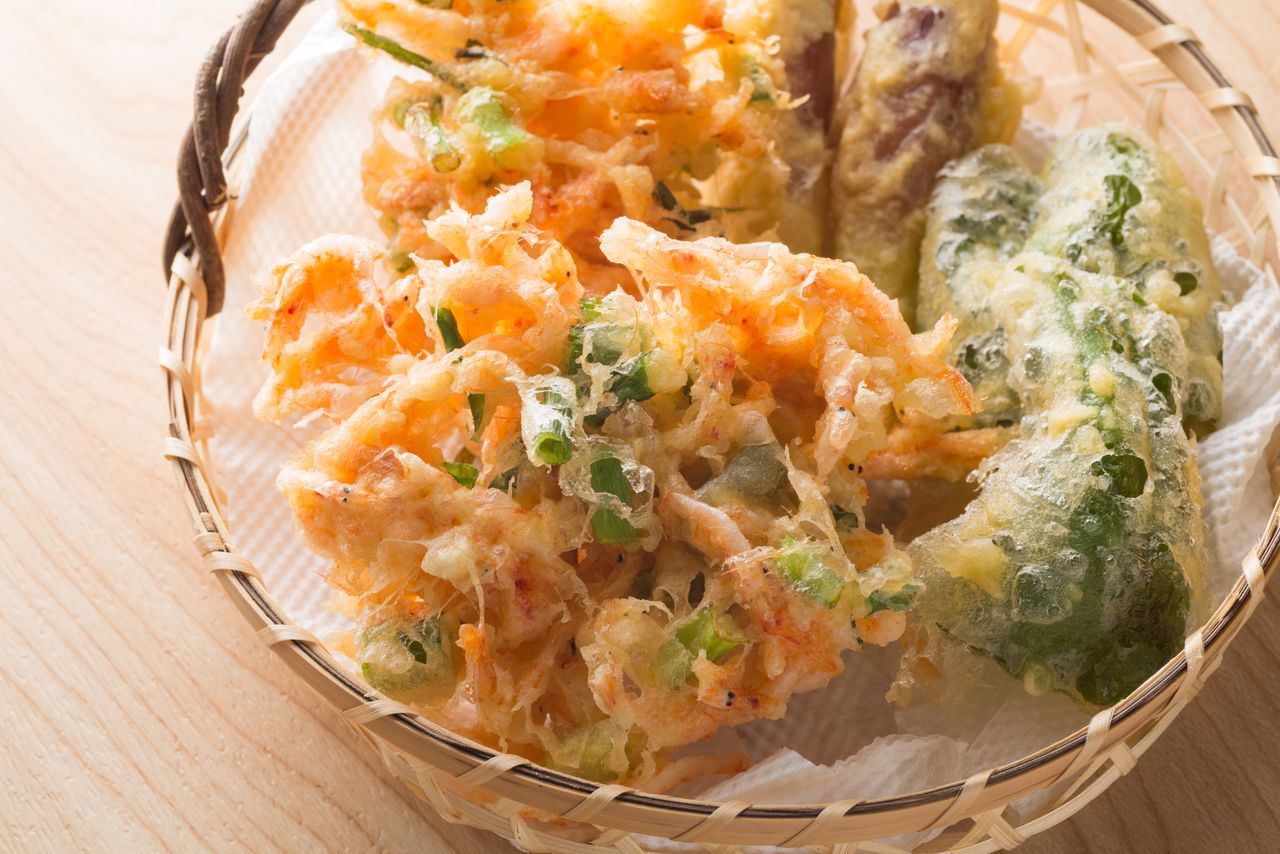
(© Pixta)
Takikomi-gohan
Adding sakuraebi to this mixed rice dish gives it a lovely hint of pink. You can make delicious rice balls with it too.
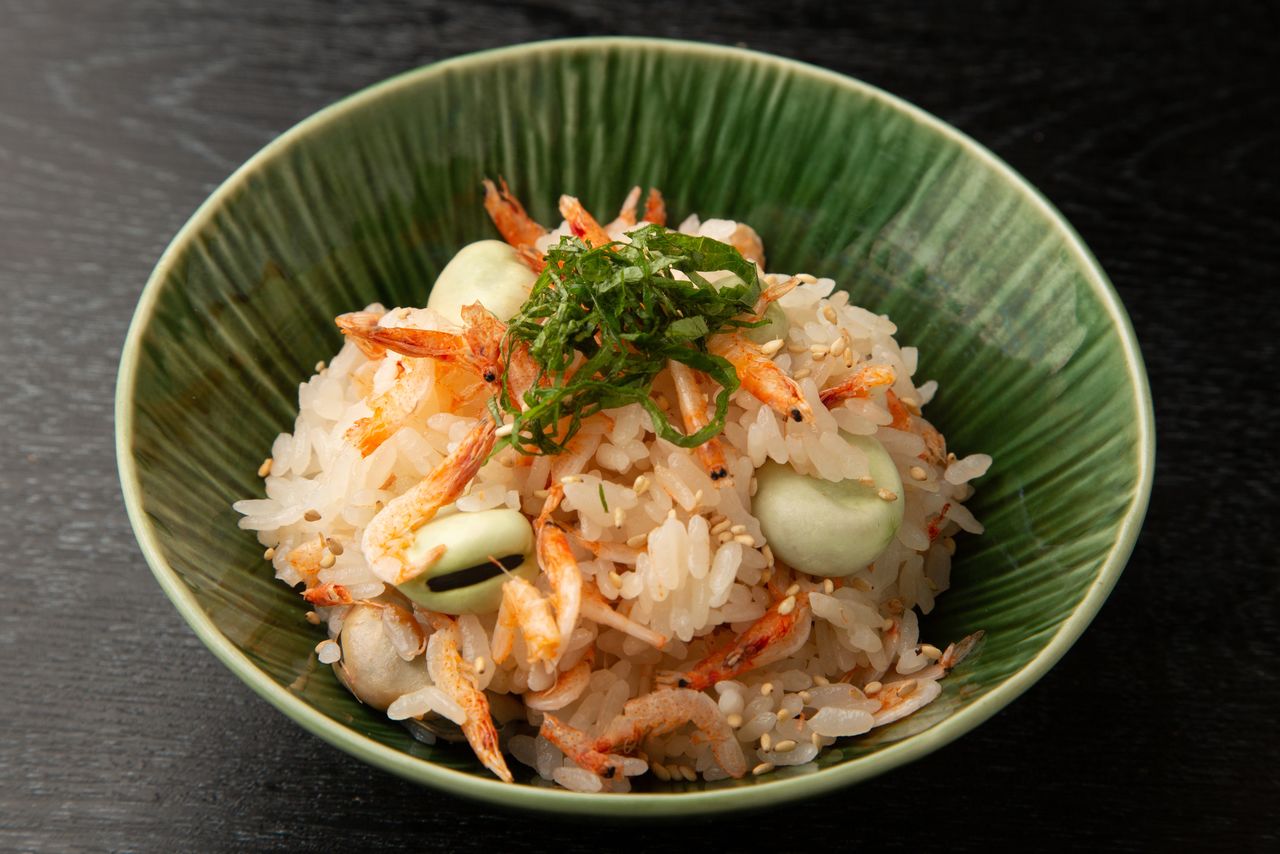
(© Pixta)
Sakuraebi Peperoncino
Sakuraebi doesn’t just have to be for Japanese cuisine! Adding these succulent little pink shrimps, along with emerald green vegetables, to the simple Italian dish peperoncino spaghetti creates a dazzling presentation.
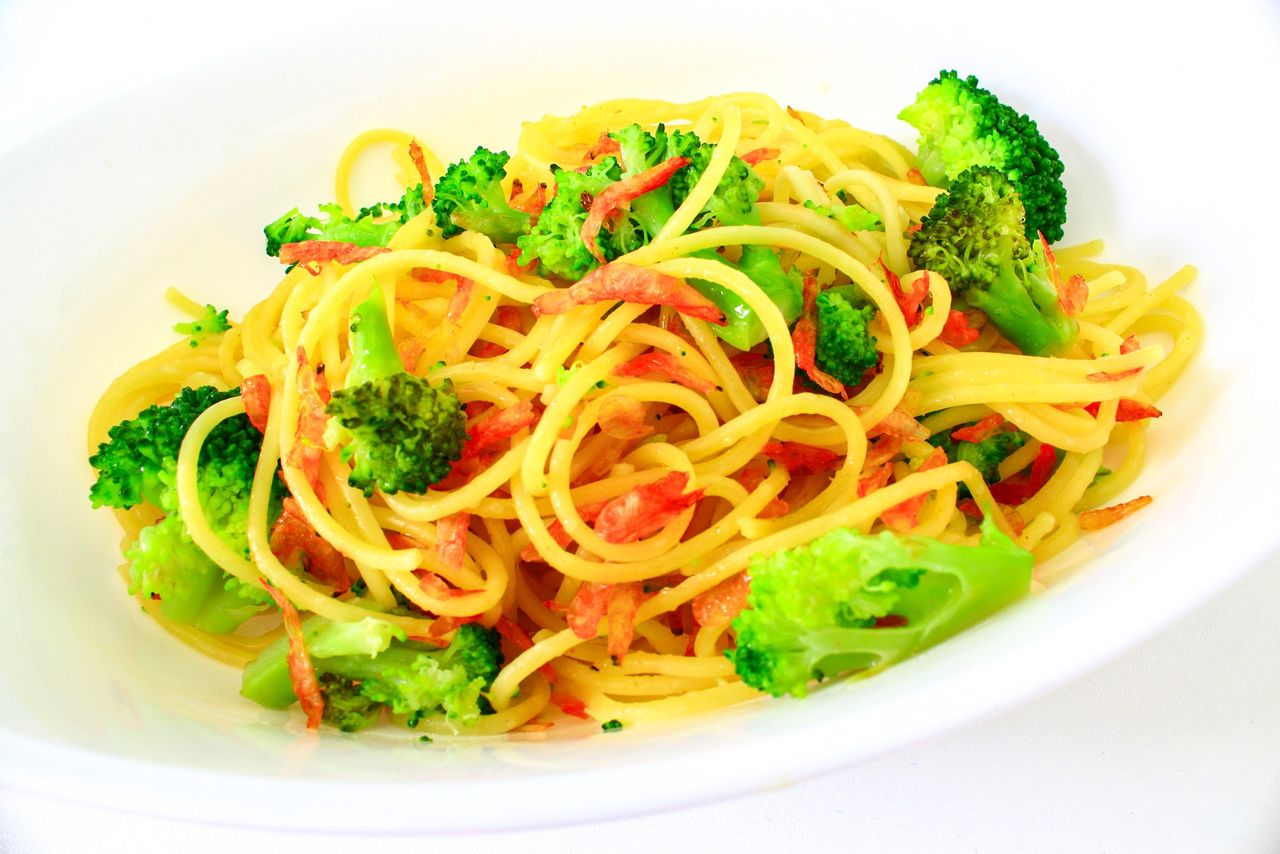
(© Pixta)
Data Sources
- Sakuraebi (Japanese) from the Shizuoka Prefectural Research Institute of Fishery and Ocean
(Originally published in Japanese. Banner photo: Freshly caught sakuraebi. © Pixta.)