


Tokyo, Nov. 3 (Jiji Press)--While Japan on Tuesday marked 80 years since the promulgation of its Constitution, debate continues over whether the supreme law should be revised to include an emergency clause that temporarily expands the government's authority during large-scale disasters.
Some experts argue that such a clause is necessary for ensuring swift initial responses to disasters, such as a possible powerful earthquake striking directly beneath the Tokyo metropolitan area or in the Nankai Trough in the Pacific off central and western Japan. Others are concerned, saying that it could lead to a concentration of authority.
Yoshiaki Kawata, a Kansai University professor specializing in major natural disasters, said that "existing laws alone may not be sufficient in certain cases" because large-scale disasters would require responses involving multiple agencies and ministries. While the disaster management basic law contains a provision for a disaster-related state of emergency, applying the clause would require time for coordination across relevant agencies, and "damage will continue to spread in the meantime," he said.
Kawata called for a mechanism in which a state-of-emergency clause is applied when disasters exceed certain criteria to be set based on damage projections. A system enabling the prime minister to make decisions swiftly based on expert opinions is necessary, he added.
Meanwhile, lawyer Koju Nagai, an expert on constitutional revision, is cautious about introducing an emergency clause to the supreme law.
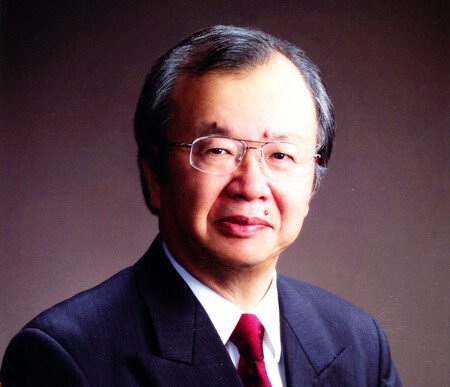
 Kansai University professor Yoshiaki Kawata (Courtesy of Kawata's laboratory)
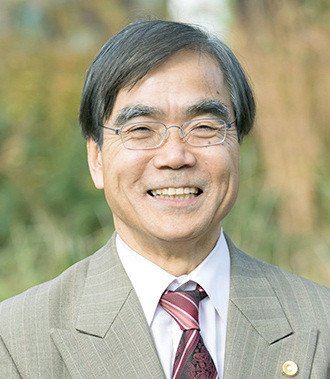 Lawyer Koju Nagai (From the website of Answer Law Office)
 Kokushikan University professor Akira Kotaki (Courtesy of Kotaki)
[Copyright The Jiji Press, Ltd.]






 Read in other languages