


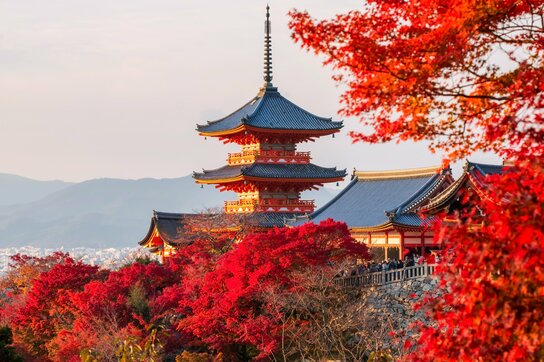
Seeking out the fiery colors of autumn leaves is a cherished pastime in Japan, shaped by centuries of seasonal traditions.
Kōyō: The Colors of Japan’s Fall
In Japan, the autumn spectacle of deciduous trees turning vibrant red and yellow is called kōyō or momiji. Heading into the mountains, forests, and parks to admire the leaves is a beloved annual pastime.
This custom is called momijigari, literally meaning “autumn leaf hunting.” Although the term has nothing to do with hunting animals, there are several theories about its origins. One suggests that wandering through the mountains and fields in search of colorful leaves was likened to hunting, while another holds that the name comes from the practice of collecting autumn leaves and branches to enjoy their beauty. Much like hanami, the springtime tradition of cherry blossom viewing, momijigari is an important custom that reflects the Japanese appreciation for the changing seasons. Among the best-known trees for autumn foliage are Japanese maples, celebrated for their bright red leaves, and ginkgo trees, which turn a brilliant golden yellow.
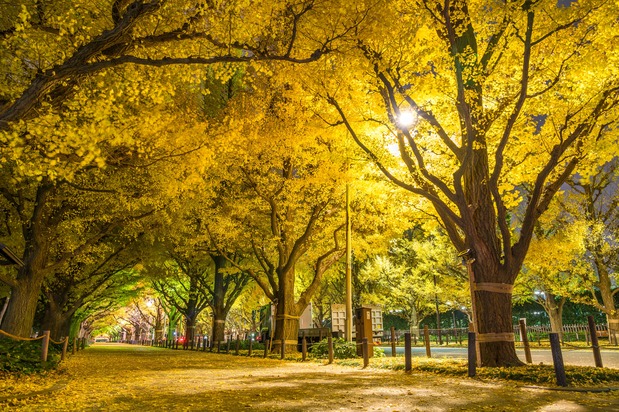
 The ginkgo-lined avenue at Meiji Jingū Gaien in Tokyo. (© Adobestock)
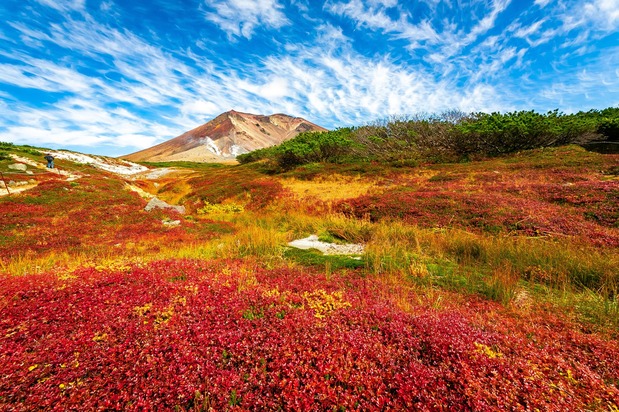 Mount Asahidake in Hokkaidō’s Daisetsuzan Mountains in autumn. (© Adobestock)
The pleasures of momijigari extend beyond admiring colorful trees at famous foliage spots. Fallen leaves blanketing the ground create beautiful “carpets of autumn leaves,” offering another sight to savor. Many destinations also illuminate their trees at night during peak season, creating enchanting scenes with a completely different atmosphere from the daytime.
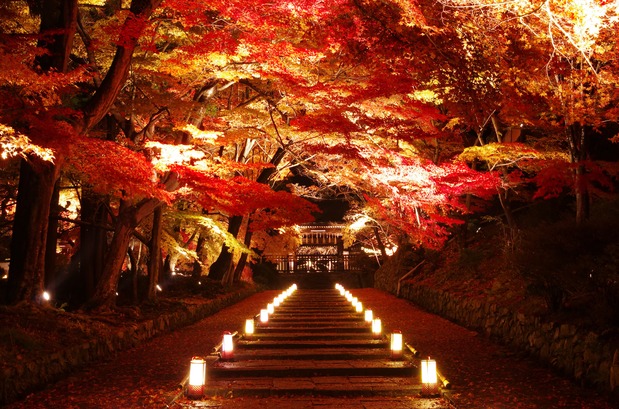 Illuminated autumn leaves at Bishamondō temple in Kyoto. (© Adobestock)
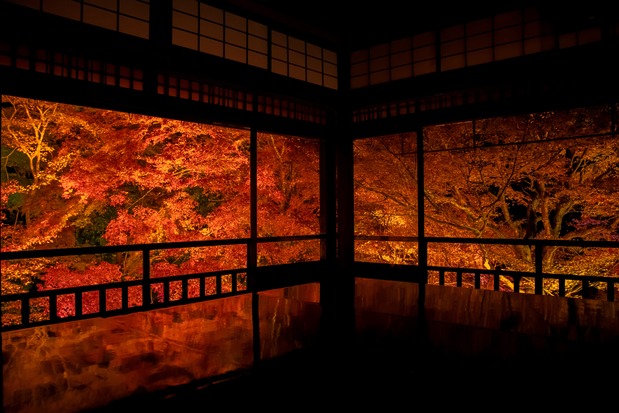 A mesmerizing reflection of autumn foliage in a jet-black lacquered table at the temple Rurikōin in Kyoto. (© Adobestock)

Autumn also brings a variety of traditional Japanese sweets inspired by the red and yellow leaves of maple trees. One such treat is momiji manjū, a famous confection from Hiroshima Prefecture. First introduced in 1906, these maple leaf-shaped cakes were inspired by the famous autumn foliage of Momijidani on the island of Miyajima. Today, momiji manjū is available throughout the year.
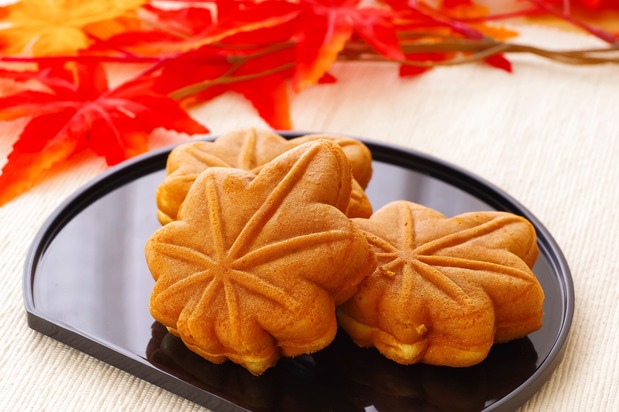 Momiji manjū (maple leaf-shaped cakes). (© Adobestock)
The Autumn Foliage Front
The timing of peak autumn foliage depends largely on temperature. Generally, cooler temperatures from September to November cause leaves to change color earlier, while warmer weather tends to delay the peak viewing season. Leaves are said to begin changing color when daily minimum temperatures fall below 8° Celsius, deepening into richer hues when temperatures drop to 5°C or lower.
While Japan's cherry blossoms begin blooming in the warmer south and gradually spread northward in spring, autumn foliage follows the opposite pattern. The color change begins in the cooler north and gradually advances southward, as well as from higher mountain elevations to lower plains. This progression is known as the “autumn foliage front.” The first signs of autumn color typically appear in Hokkaidō in September, while Tokyo and Kyoto often reach their peak viewing season between mid-November and early December. Much like cherry blossom forecasts in spring, several weather services provide updates on the foliage front. Nippon.com also shares forecasts and related information.
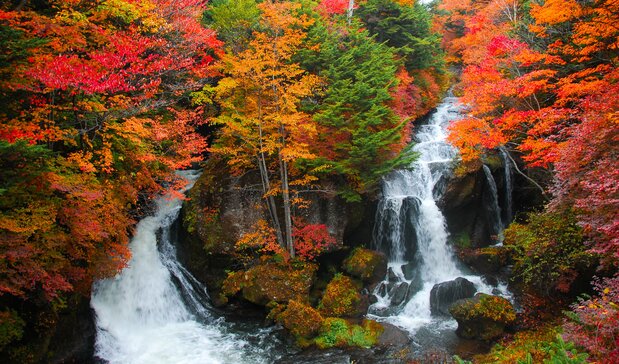 Ryūzu Falls in Nikkō, Tochigi. (© Adobestock)
The History of Momijigari
Compiled in the eighth century, the Man’yōshū, Japan’s oldest collection of waka poetry, contains more than 100 poems about autumn leaves—these are referred to far more often as “yellow leaves” than as “red leaves.” In later centuries, aristocrats in Nara and Kyoto enjoyed the elegant pastime of composing poetry while admiring the autumn colors in the mountains and countryside.
In the seventeenth century, as society became more stable under the Tokugawa shogunate and roads improved, momijigari began to spread among the general public. In Edo (present-day Tokyo), temples and mountains on the outskirts of the city were featured in guidebooks as popular autumn foliage spots. People would pack lunches and sake and head out on day trips to enjoy the seasonal scenery. That tradition of autumn outings continues to this day.

(Translated from Japanese. Banner photo: The temple Kiyomizudera in Kyoto, ablaze with autumn colors. © Adobestock.)



 Read in other languages